
Betting on football has become one of the most popular forms of sports wagering worldwide, attracting millions of fans who want to add an extra layer of excitement to game day. Whether you follow the NFL, college football, or soccer leagues across Europe, understanding how football betting works can transform your viewing experience from passive watching to active engagement. This guide breaks down everything you need to know about making a football bet, from understanding odds to developing strategies that actually work.
The sports betting industry has grown explosively since 2018, when the US Supreme Court allowed states to legalize sports wagering. By 2026, the American market handles billions of dollars in football bets each season. That growth has brought more options and better technology, but also a greater need for knowledge. Jumping into football betting without understanding the fundamentals is like trying to play poker without knowing the hand rankings.
This guide covers the essential knowledge every football bettor needs: how odds work, the main types of bets, step-by-step instructions for getting started, and strategies that separate casual gamblers from informed bettors. Before we dive in, remember that betting should be treated as entertainment, not a source of income. Set a budget, stick to it, and never wager more than you can comfortably afford to lose.
Football Wagering Markets & Core Concepts
Football betting refers to the practice of placing wagers on the outcomes of football games, player performances, or specific events within a match. At its core, you are predicting what will happen and putting money behind that prediction. If your prediction is correct, you win money based on the odds offered by the sportsbook. If you are wrong, you lose your stake.
The concept is straightforward, but the execution has evolved dramatically over the past century. Football betting traces its roots to informal wagers between friends and bookmakers operating in the shadows of stadiums. The modern industry emerged in the United Kingdom, where licensed bookmakers have operated legally for decades. In the United States, Las Vegas served as the only legal destination for football betting until 2018, when the federal ban on sports wagering was lifted. Today, legal sportsbooks operate in most states, either in person, online, or both.
One important distinction to understand upfront: the term "football" means different things in different parts of the world. In the United States and Canada, football typically refers to American football, played in the NFL and NCAA. In the rest of the world, football means soccer, the sport played with a round ball where players cannot use their hands. Both sports generate enormous betting markets, but they use somewhat different bet types and terminology. This guide covers both, noting where the approaches differ.
The sportsbook or bookmaker serves as the intermediary between bettors. They set the odds, accept wagers, pay out winners, and collect from losers. Their goal is to balance the money bet on each side of a wager while taking a small commission called the vigorish or "vig." Understanding this dynamic is crucial because it explains why odds are set the way they are and why finding value matters.
Understanding Football Betting Odds

Odds are the language of sports betting. They tell you two essential things: the implied probability of an outcome occurring and how much money you stand to win if your bet is successful. Learning to read odds fluently is the first skill every bettor must master.
American Odds Explained
American odds, also called moneyline odds, are the standard format used by sportsbooks in the United States. They are expressed with either a plus sign or a minus sign followed by a number.
A minus sign indicates the favorite, the side expected to win. The number tells you how much you need to bet to win one hundred dollars. For example, odds of -150 mean you must wager one hundred fifty dollars to win one hundred dollars in profit. If your bet wins, you receive your original stake back plus the hundred dollars, for a total return of two hundred fifty dollars.
A plus sign indicates the underdog, the side expected to lose. The number tells you how much you would win on a hundred dollar bet. Odds of +200 mean a hundred dollar bet would return two hundred dollars in profit, plus your original stake, for a total of three hundred dollars.
The larger the negative number, the heavier the favorite. The larger the positive number, the bigger the underdog. A team at -300 is a much stronger favorite than a team at -120. Conversely, a +500 underdog is considered far less likely to win than a +110 underdog.
Consider a practical example: the Kansas City Chiefs are playing the Denver Broncos. The Chiefs are listed at -180, while the Broncos are at +155. To bet on Kansas City, you would need to risk one hundred eighty dollars to win one hundred. To bet on Denver, a hundred dollar bet would return one hundred fifty-five dollars in profit if the Broncos pull off the upset.
Decimal Odds
Decimal odds are the most common format outside North America, particularly popular in Europe and Australia. They express the total return on a winning bet, including your original stake.
Reading decimal odds is simple: multiply your stake by the decimal number to calculate your total return. If a team has odds of 2.50 and you bet ten dollars, your total return would be twenty-five dollars (ten multiplied by 2.50), including your original stake plus fifteen dollars profit.
Converting American odds to decimal is straightforward. For positive American odds, divide by one hundred and add one. So +200 becomes 3.00. For negative American odds, divide one hundred by the number and add one. So -150 becomes 1.67. Most online sportsbooks allow you to switch between odds formats in your account settings.
Fractional Odds
Fractional odds are the traditional format used in the United Kingdom, though they have largely been replaced by decimals even there. You will still encounter them at British betting shops and horse racing coverage.
Fractional odds show the profit relative to the stake. Odds of 3/1, spoken as "three to one," mean you win three dollars for every dollar bet. A ten dollar bet at 3/1 returns thirty dollars profit plus your ten dollar stake, totaling forty dollars.
When the first number is smaller than the second, like 1/2 (one to two), you are betting on a favorite. This means you need to bet two dollars to win one dollar profit, equivalent to decimal odds of 1.50 or American odds of -200.
Implied Probability
Behind every set of odds is an implied probability, the bookmaker's assessment of how likely an outcome is to occur. Converting odds to probability helps you identify value bets, situations where you believe the true likelihood is higher than what the odds suggest.
For American odds, the formulas are: for negative odds, divide the absolute value of the odds by (the absolute value plus one hundred), then multiply by one hundred. For positive odds, divide one hundred by (the odds plus one hundred), then multiply by one hundred. So -150 implies a probability of 60 percent (150 divided by 250 equals 0.60). And +200 implies a probability of 33.3 percent (100 divided by 300 equals 0.333).
Notice something interesting when you convert both sides of a typical betting line: the probabilities add up to more than 100 percent. If one team is -150 (60 percent implied) and the other is +130 (43.5 percent implied), the total is 103.5 percent. That extra 3.5 percent represents the vigorish, the sportsbook's margin for taking bets.
Understanding implied probability transforms how you evaluate betting lines. Instead of asking "Will this team win?" you start asking "Is this team more likely to win than the odds suggest?" That shift in thinking separates recreational bettors from those who approach betting with a sharper edge.
Types of Football Bets
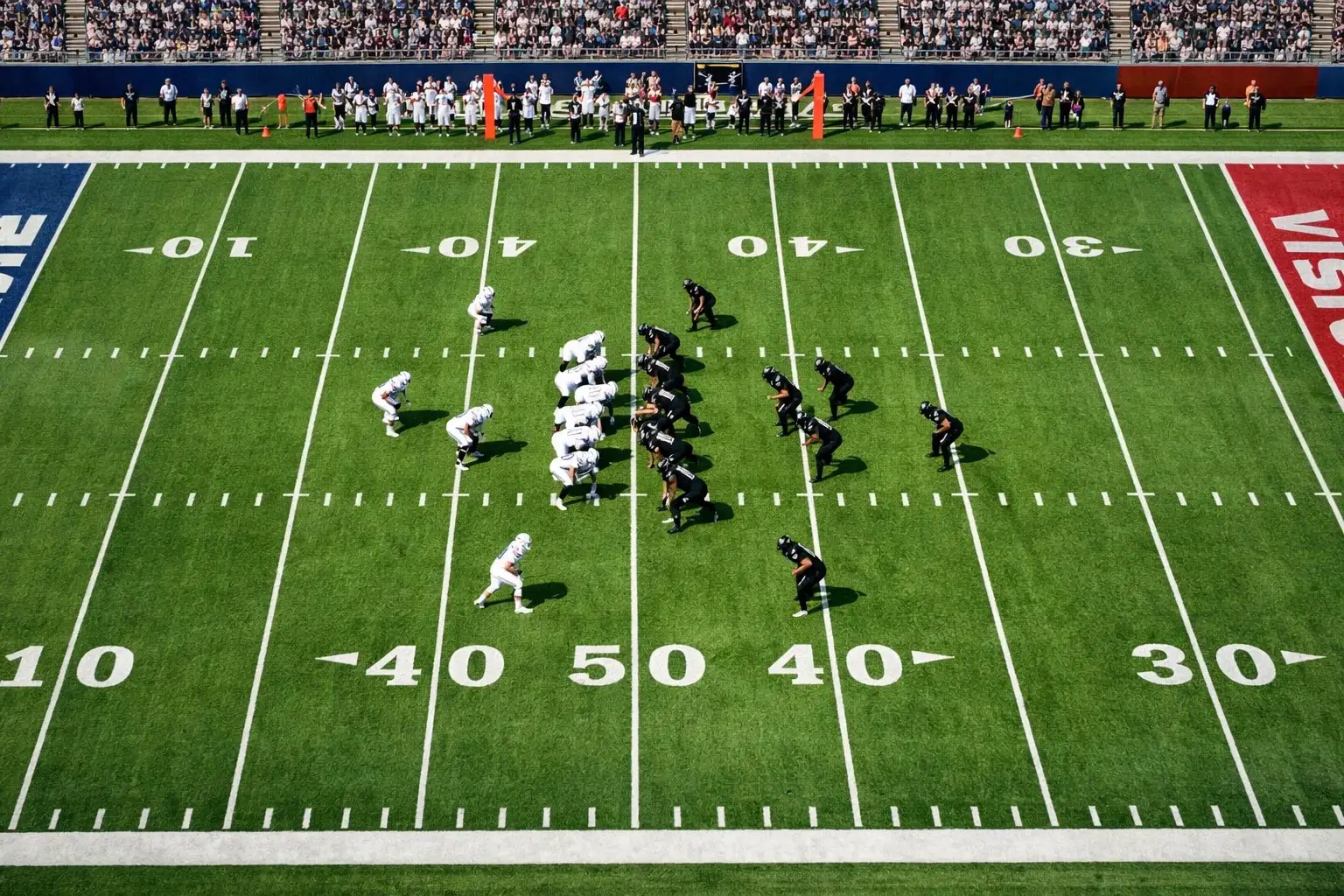
Sportsbooks offer dozens of different ways to bet on football games. Some are simple, others complex. Some offer low risk with modest rewards, others carry significant risk with potentially huge payouts. Understanding the main bet types allows you to choose the right wager for any situation.
Point Spread
The point spread is the most popular bet type for American football. It levels the playing field by giving the underdog a head start and forcing the favorite to win by a certain margin.
When you see a spread of -7.5 on the Chiefs against the Broncos, Kansas City must win by eight or more points for a spread bet on them to pay out. If the Chiefs win 24-20, they won the game but did not cover the spread, and bettors who took Kansas City at -7.5 lose. Meanwhile, Denver at +7.5 only needs to lose by seven or fewer points, or win outright, for that bet to cash.
The standard odds on spread bets are -110 on both sides, meaning you risk one hundred ten dollars to win one hundred. This symmetry reflects the sportsbook's goal of attracting equal action on both teams. When money comes in heavily on one side, the book may adjust the spread to encourage bets on the other team.
Key numbers matter enormously in NFL spread betting. The numbers 3 and 7 occur most frequently as final margins because of how scoring works (field goals worth three, touchdowns plus extra points worth seven). Games landing exactly on these numbers can turn wins into losses or pushes. A push occurs when the result lands exactly on the spread number, such as a seven-point favorite winning by exactly seven. In a push, all spread bets are refunded.
Moneyline Bets
Moneyline bets strip away the complexity of spreads. You are simply picking which team will win the game outright. The odds adjust to reflect each team's perceived chances of victory.
Heavy favorites carry steep prices on the moneyline. A team that is -7 on the spread might be -300 or worse on the moneyline, meaning you risk three hundred dollars to win one hundred. That price reflects the high probability of victory, but it also means one upset wipes out profits from multiple winning bets.
Underdogs on the moneyline can be attractive when you believe a team has a realistic chance to win outright. A +7 underdog might sit at +250 on the moneyline. That hundred dollar bet returns two hundred fifty dollars profit if the upset happens. The question becomes whether the payout justifies the risk.
Moneyline betting requires different bankroll considerations than spread betting. The variance is higher because you need underdogs to win, not just cover. Many bettors use moneyline parlays with small favorites to increase payouts without dramatically increasing risk, though parlays carry their own strategic considerations.
Over/Under Totals
Totals betting ignores which team wins and focuses instead on how much both teams will score combined. The sportsbook sets a number, and you bet whether the actual combined score will be over or under that total.
For an NFL game with a total of 47.5, betting the over means you need the final score to add up to 48 or more. If the game ends 28-24, the total is 52, and the over wins. The under would need the combined score to stay at 47 or below.
Several factors influence totals: weather conditions, offensive and defensive rankings, pace of play, and recent scoring trends. A game between two high-powered offenses with weak defenses naturally carries a higher total than a defensive struggle. Wind, rain, or extreme cold typically push scores down.
Totals betting offers a way to have action on a game without picking sides. If you believe a matchup will be high-scoring but cannot decide who wins, the over lets you participate. Many bettors specialize in totals analysis because it requires a different skill set than picking winners.
Parlays and Accumulators
Parlays combine multiple bets into a single wager. All selections must win for the parlay to pay out. In exchange for this increased difficulty, the potential payout grows significantly.
A two-team parlay at standard -110 odds pays roughly 2.6 to 1. A three-team parlay pays around 6 to 1. A four-team parlay approaches 11 to 1. The payouts continue scaling upward with each added leg, but so does the difficulty of winning.
The math works against parlay bettors over time. Each additional leg multiplies the probability of losing. If each bet has a true 50 percent chance of winning, a two-team parlay hits 25 percent of the time, a three-team parlay hits 12.5 percent, and a four-team parlay hits just 6.25 percent. The payouts, while generous, do not fully compensate for this reduced probability.
Same-game parlays have gained popularity, allowing bettors to combine multiple bets from a single contest, such as a team to win, a player to score a touchdown, and the game to go over the total. These carry correlated risk since the outcomes are related, and sportsbooks adjust the odds accordingly.
Parlays can be entertaining and occasionally profitable, but they should represent a small portion of your overall betting activity. The house edge on parlays is substantially higher than on straight bets.
Teaser Bets
Teasers are a football-specific variation of parlays that allow you to adjust the point spread in your favor, at the cost of reduced odds.
A standard six-point teaser lets you move each spread six points. If you like the Chiefs at -7 and the Bills at -3, a teaser shifts those to -1 and +3. Both teams still need to cover their adjusted spreads, but the cushion improves your chances on each leg.
Football teasers work best when crossing key numbers. Moving from -8.5 through 7 and 3 to -2.5 captures enormous value because so many games land on those margins. Moving from -4.5 to +1.5 crosses only one key number and provides less mathematical edge.
Two-team six-point teasers at standard pricing require winning approximately 73 percent of legs to break even. That is achievable with careful selection, particularly when teasing through multiple key numbers. Larger teasers with more legs face the same compounding probability problem as parlays.
Prop Bets
Proposition bets, or props, focus on specific events within a game rather than the final outcome. They range from player performance stats to game events to novelty outcomes.
Player props let you bet on individual statistics: passing yards for a quarterback, rushing yards for a running back, receptions for a receiver, or touchdowns scored. Will Patrick Mahomes throw for over 285.5 yards? Will Derrick Henry rush for more than 95.5 yards? Each prop comes with its own odds.
Game props cover team and situational outcomes: which team scores first, whether there will be a safety, the total number of sacks, or the margin of victory. The Super Bowl famously includes novelty props like the length of the national anthem or the color of the Gatorade shower.
Props have become increasingly popular because they allow bettors to leverage specific knowledge. If you follow a team closely and understand their tendencies, you might spot value in props that the general betting public misses. However, props also carry wider margins for the sportsbook, so the edge cuts both ways.
Futures Bets
Futures are long-term bets on outcomes that will be decided weeks or months in the future. The most common football futures involve championship winners, division winners, and individual awards.
Before the NFL season, you can bet on which team will win the Super Bowl, each conference, or each division. Odds adjust throughout the season based on team performance, injuries, and remaining schedule. A team that opens at +2000 might shorten to +500 after a strong start or drift to +5000 after key injuries.
Player award futures include MVP, Offensive Player of the Year, Defensive Player of the Year, and Rookie of the Year. These markets are highly volatile early in the season and stabilize as the sample size grows.
The appeal of futures lies in the potential for large payouts on small stakes. Correctly identifying a Super Bowl winner at +3000 preseason turns a modest bet into a significant return. The downside is that your money remains locked up for months, and the variance is extreme. Most futures bets lose.
How to Bet on Football: Step-by-Step Guide
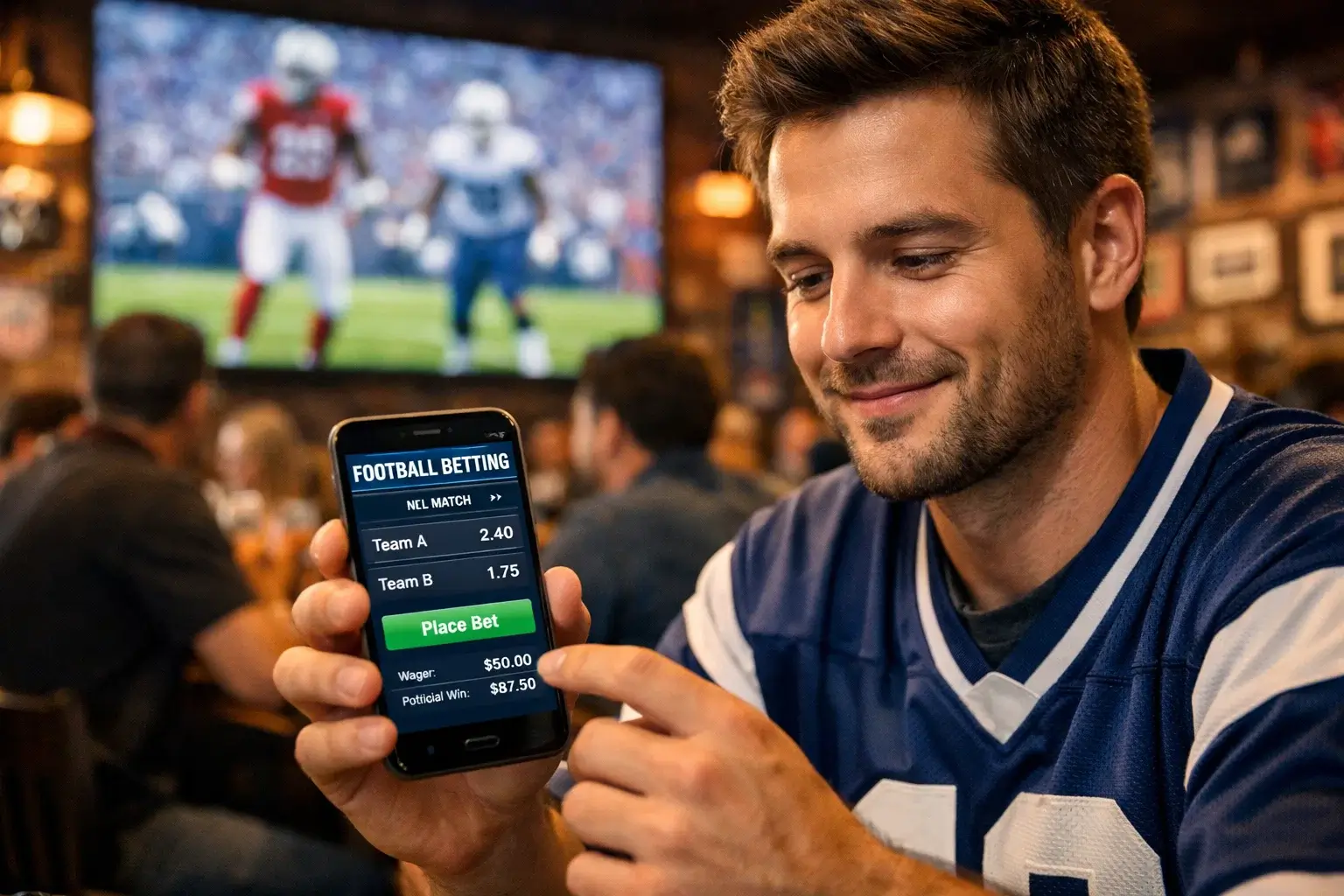
Getting started with football betting has never been more accessible. Legal online sportsbooks operate in most US states, and the signup process takes minutes. Here is how to place your first bet.
Step 1: Choose a Licensed Sportsbook
The most important decision is selecting a reputable, legally licensed sportsbook. Look for operators licensed by your state's gaming commission. Major brands like DraftKings, FanDuel, BetMGM, and Caesars operate legally across multiple states with established track records.
Avoid offshore sportsbooks that operate without US licensing. While they may accept bets from anywhere, you have no legal recourse if something goes wrong. Deposits and withdrawals become complicated, and some operators have histories of slow payments or account restrictions on winning players.
Compare welcome bonuses, but read the terms carefully. A "deposit match up to five hundred dollars" sounds generous, but the rollover requirements often mean you must bet the bonus amount multiple times before withdrawing. Focus on the ongoing user experience: competitive odds, a functional app, responsive customer service, and fast payouts.
Step 2: Create an Account
Registration requires basic personal information: name, address, email, date of birth, and the last four digits of your Social Security number. This information is used to verify your identity and ensure you are of legal betting age (21 in most states).
Sportsbooks are required by law to verify customer identities, so expect to upload a photo ID during or shortly after registration. This process protects both the operator and you from fraud.
Choose a strong password and enable two-factor authentication if available. Your sportsbook account will hold real money, so treat its security seriously. Most apps support biometric login through fingerprint or face recognition for convenient but secure access.
Step 3: Deposit Funds
Once verified, navigate to the cashier or deposit section. Common funding methods include debit cards, bank transfers, PayPal, Venmo, and cage deposits at partnered casinos. Credit card deposits are restricted or unavailable at most US sportsbooks due to card network policies.
Select your deposit amount and method. First-time depositors often receive bonus offers, so ensure you understand whether opting in is required and what conditions apply. Minimum deposits typically range from ten to twenty dollars.
Funds from debit cards and e-wallets usually appear instantly. Bank transfers may take one to three business days. Once your balance shows the deposited amount, you are ready to bet.
Step 4: Navigate to Football Markets
Find the football section in the sportsbook lobby. Most apps organize by sport, then by league (NFL, NCAA, CFL, or soccer leagues), then by date or matchup. Selecting a specific game opens the available betting markets.
The default view typically shows the spread, moneyline, and total for each game. Clicking on a game reveals additional markets: props, alternate lines, team totals, quarter and half betting, and more. The depth of markets varies by game; high-profile matchups offer more options than early-season games between less popular teams.
Familiarize yourself with the interface before betting. Locate where odds are displayed, how to add selections to your bet slip, and where the wager amount field appears. Each app has slightly different navigation, but the core functions are similar.
Step 5: Place Your Bet
Click the odds for the bet you want to place. This adds the selection to your bet slip, usually displayed at the bottom of the screen or in a sidebar. Enter the amount you want to wager. The bet slip will display your potential payout based on the current odds.
Review your selection carefully. Confirm you have chosen the correct team, bet type, and amount. Odds can change between when you add a selection and when you confirm, especially during busy periods. Some apps alert you to odds changes; others accept the bet at the new price automatically.
Tap "Place Bet" or "Confirm" to submit your wager. You will receive a confirmation screen and usually an email receipt. Your bet is now live. You can track its status in the "My Bets" or "Open Bets" section of the app.
Football Betting Strategies
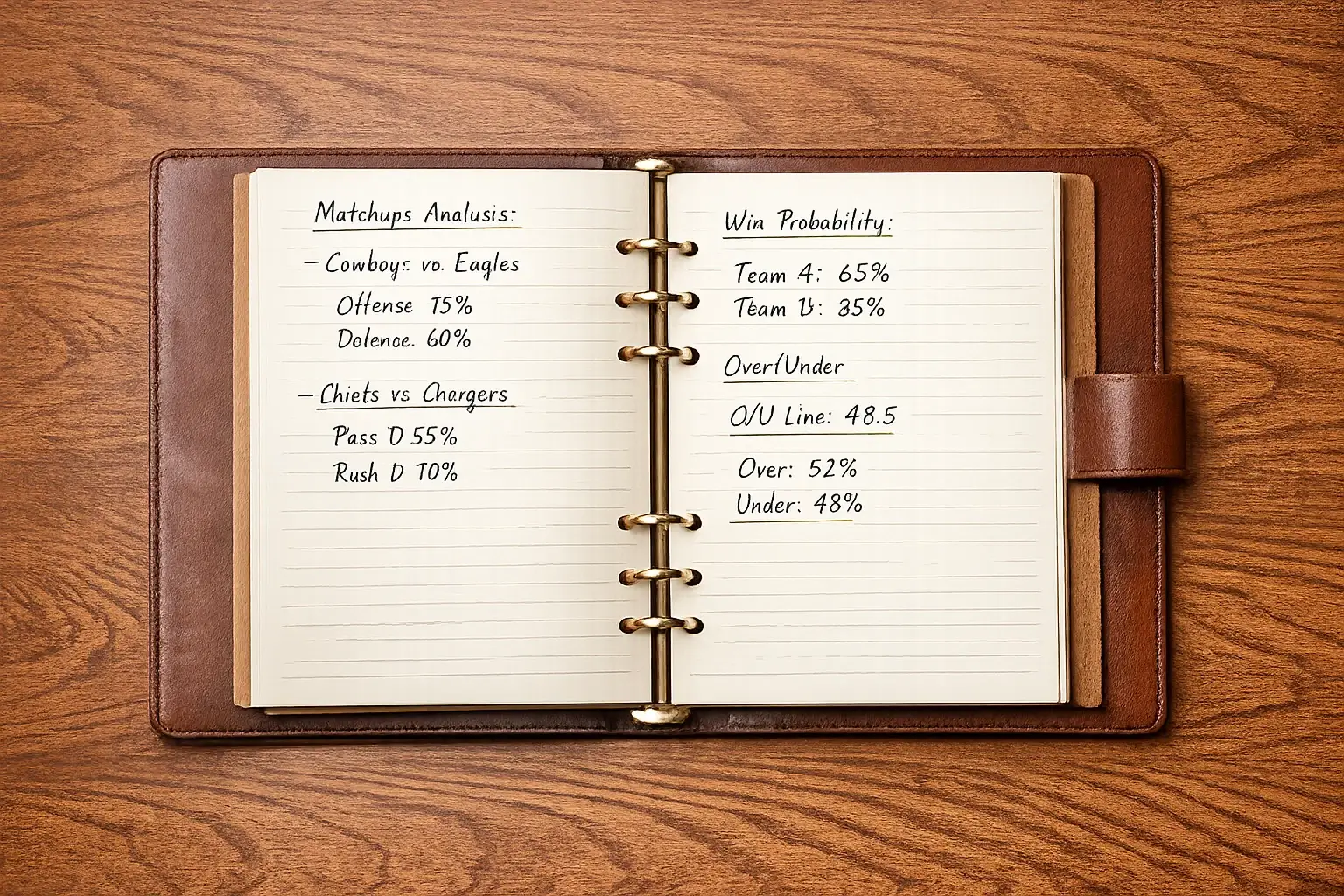
Anyone can place a bet. Developing an approach that produces profits over time requires discipline, research, and sound strategy. These fundamentals separate long-term winners from recreational bettors who eventually go broke.
Bankroll Management Fundamentals
Your bankroll is the total amount of money you have set aside specifically for betting. It should be money you can afford to lose entirely without affecting your financial stability. Never bet with rent money, emergency funds, or borrowed cash.
The standard advice is to risk between one and five percent of your bankroll on any single bet. This unit-based approach protects you from the inevitable losing streaks. If you have a one thousand dollar bankroll, a one percent unit is ten dollars. Even a bad run of ten consecutive losses, which happens more often than you might expect, costs you only one hundred dollars rather than your entire stake.
Resist the temptation to increase bet sizes after losses to "get even." This behavior, called chasing, leads to catastrophic bankroll destruction. The math does not change based on your previous results. Each bet exists independently, and increasing stakes after losses only compounds the damage when the losing streak continues.
Conversely, consider reducing bet sizes during cold stretches and potentially increasing them during hot runs, though always within your predetermined unit range. Some bettors recalculate their unit size monthly or quarterly based on current bankroll.
Value Betting
Value betting is the cornerstone of profitable sports wagering. A value bet exists when you believe the true probability of an outcome is higher than what the odds imply.
Say you analyze a game and conclude the underdog has a 40 percent chance of winning outright. The sportsbook has them at +180, which implies only 35.7 percent probability. That gap represents value. Over time, betting into these situations produces profit even if many individual bets lose.
Finding value requires you to form your own opinions about game probabilities independent of the betting lines. This might involve building models, tracking statistics, or developing deep expertise in specific teams or situations. The key is having a quantified view that differs from the market.
Line shopping amplifies value betting. Different sportsbooks often post different odds on the same game. If one book has a team at +3.5 -110 while another has them at +4 -110, the extra half point represents real value. Serious bettors maintain accounts at multiple sportsbooks to capture the best available lines.
Key Number Strategy
In American football, final margins cluster around certain numbers because of the scoring structure. Touchdowns with extra points are worth seven, field goals worth three. The most common final margins are 3, 7, 6, 10, and 14 points.
This clustering makes key numbers valuable in spread betting. Getting +3.5 instead of +3 can be the difference between winning and losing when a favorite wins by a field goal. Getting +7.5 instead of +7 protects you against the touchdown margin.
Some sportsbooks allow you to buy points, adjusting the spread in exchange for worse odds. Buying from +2.5 to +3.5 might move your odds from -110 to -130. Whether this trade makes mathematical sense depends on how frequently games land on that number. Generally, buying through 3 and 7 in the NFL can be worthwhile; buying through other numbers rarely justifies the cost.
Situational Betting
Beyond raw statistical analysis, smart bettors consider situational factors that affect performance and motivation.
Scheduling spots matter. A team playing their third road game in a row may underperform. A team coming off a short week after Monday Night Football faces a disadvantage against a rested opponent. Lookahead spots, where a team overlooks a weak opponent before a marquee matchup, create value on underdogs.
Weather affects totals more than spreads, but extreme conditions can impact both. Wind above fifteen miles per hour suppresses passing games and kicking accuracy. Heavy rain creates fumble opportunities and favors running teams. Cold weather in itself has minimal effect on professionals but may benefit teams accustomed to playing in it.
Injuries and absences create some of the most significant betting edges. The market often underreacts to backup quarterback situations or overreacts to skill position injuries. Offensive line injuries, rarely discussed in mainstream coverage, can dramatically affect team performance.
Research and Data Analysis
Informed betting requires information. Develop a research routine that you follow consistently before betting each week.
Review injury reports carefully. The official NFL injury designations (Out, Doubtful, Questionable) provide baseline information, but beat reporters often reveal more about who will actually play and at what capacity. Practice report participation matters, especially for skill positions.
Track line movement. When a line moves from -3 to -3.5 despite public money appearing to be on the other side, sharp action likely caused the move. Understanding why lines move helps you identify which side the professional bettors favor.
Build or access statistical models. At minimum, understand basic efficiency metrics: points per play, yards per attempt, success rate, and expected points. More sophisticated bettors incorporate advanced analytics, opponent adjustments, and predictive modeling. The goal is having a framework for evaluating teams that goes beyond "they looked good last week."
Live Football Betting
Live betting, also called in-play betting, allows you to place wagers while the game is in progress. Odds update continuously based on score, time remaining, and game situation.
The appeal is clear: you can watch how a game unfolds before committing money. If one team dominates the first quarter but the spread has not adjusted fully, you might find value. If a key player gets injured early, live markets react faster than pregame lines can.
Live betting also lets you hedge positions taken before the game. Suppose you bet heavily on a team at -3 pregame and they score first to go up 7-0. The live spread might shift to -10. You could bet the other side at +10 to guarantee a middle opportunity, where you win both bets if the favorite wins by 7, 8, or 9.
Popular live markets include updated spreads and totals, next team to score, drive result, and player props on remaining production.
The challenges of live betting are significant. Odds move quickly, requiring decisions under time pressure. The lines often incorporate wider margins than pregame bets because the sportsbook takes on more risk with fast-changing situations. Delays between broadcast and real-time action can put you at a disadvantage.
Live betting rewards those who can process information quickly and read game flow. It punishes impulse bettors who chase bad pregame positions or react emotionally to swings in action.
Football Leagues to Bet On
Football betting markets span multiple leagues and competitions, each with distinct characteristics and betting considerations.
NFL (National Football League)
The NFL is the most heavily bet football league in the United States, with the Super Bowl generating more wagering handle than any other single event in sports.
The seventeen-game regular season runs from early September through early January, followed by playoffs culminating in the Super Bowl in February. Each team plays once per week, giving bettors six full days to analyze matchups. This schedule makes NFL betting particularly research-friendly compared to sports with daily games.
Key NFL betting factors include the injury report (released Wednesday through Friday), weather forecasts (especially for outdoor stadiums in northern cities), and divisional dynamics (teams face division rivals twice, creating familiarity and intensity). Playoff games often feature tighter spreads as talent levels converge among surviving teams.
NCAA College Football
College football offers more games and more variance than the NFL. With over one hundred thirty teams in the top division, mismatches are common, and information edges are more accessible.
The regular season runs from late August through early December, followed by conference championships and bowl games including the College Football Playoff. Saturday is the primary game day, with some weeknight matchups.
College spreads frequently exceed twenty points because talent disparities are enormous. A top program like Ohio State or Alabama facing a rebuilding team might be favored by thirty or more. Totals vary wildly based on tempo; some teams run sixty plays per game while others run ninety.
Key college football considerations include transfers (roster composition changes dramatically year to year), coaching changes, travel distances, and home field advantages that can be stronger than in the NFL. Conference familiarity matters since teams play the same opponents annually.
CFL (Canadian Football League)
The Canadian Football League offers summer football betting when the NFL is off. The nine-team league plays from June through November, concluding with the Grey Cup championship.
Rule differences affect betting significantly. The CFL field is larger, teams have only three downs instead of four, and scoring rules differ slightly. These factors create higher-scoring games on average.
Market efficiency in the CFL is lower than the NFL, creating potential opportunities for bettors willing to research. However, information is harder to find, and betting limits are often lower.
Soccer/Football (Global)
For international audiences, football means soccer, and the betting markets dwarf American football in global volume.
Major leagues include the English Premier League, Spanish La Liga, German Bundesliga, Italian Serie A, and continental competitions like the UEFA Champions League. These leagues play year-round with brief summer breaks.
Soccer betting uses different terminology. The three-way moneyline (1X2) includes the draw as an outcome, adding complexity absent from American football. Asian handicaps function like point spreads but can have quarter-goal increments. Both Teams to Score (BTTS) and correct score markets are popular options unavailable in American football.
The biggest adjustment for American football bettors is accounting for draws, which occur in roughly 25 percent of soccer matches. Ignoring this possibility leads to significant errors in probability assessment.
Common Football Betting Mistakes to Avoid
Losing bettors tend to make the same mistakes repeatedly. Identifying and eliminating these errors is often more valuable than finding new edges.
Betting with your heart instead of your head tops the list. Fans love to bet on their favorite teams, but emotional attachment clouds judgment. You overestimate your team's chances and underestimate opponents. If you cannot bet against your team when the line warrants it, you should probably avoid betting on their games entirely.
Ignoring bankroll management destroys more bettors than bad analysis. Winning fifty-five percent of your bets means nothing if you bet your entire bankroll on the losses. Stick to your unit sizes even when you feel extremely confident. The feeling of certainty is not correlated with actual probability.
Chasing losses is bankroll management's evil twin. After a losing day, the urge to place more bets at higher stakes to "get back to even" is powerful and destructive. Tomorrow is a new day with new opportunities. The games do not know or care about your previous results.
Overcomplicating with parlays appeals to bettors seeking big payouts, but the math favors straight bets. An occasional small parlay for entertainment is fine, but building a strategy around parlay betting is building on sand.
Failing to shop for lines leaves money on the table. If you bet exclusively with one sportsbook, you accept whatever odds they offer. Having accounts at three or four books lets you grab the best number available, which compounds into significant savings over time.
Neglecting research seems obvious yet remains common. Many bettors place wagers based on gut feeling, team names, or recent memory. The sportsbooks employ sophisticated analysts and algorithms. To compete, you need to put in actual work.
Responsible Gambling

Sports betting should be entertainment, a way to increase engagement with games you already enjoy. When it stops being fun or starts causing financial stress, something has gone wrong.
Set strict limits before you begin: how much you will deposit per month, how much you will bet per game, and how much you are willing to lose before stopping. Write these limits down and respect them without exception. The limits exist to protect you from the poor decisions that come with emotional betting.
Never bet money you cannot afford to lose. This means not betting with rent money, bill money, emergency savings, or borrowed funds. If you find yourself contemplating these bets, that is a serious warning sign.
Recognize the signs of problem gambling: betting more than intended, lying about gambling, feeling restless when trying to cut back, chasing losses, and neglecting responsibilities due to gambling. These patterns indicate that entertainment has become addiction.
Resources exist if gambling becomes a problem. The National Council on Problem Gambling operates a confidential helpline at 1-800-522-4700. Every legal sportsbook is required to provide responsible gambling tools including deposit limits, loss limits, cooling-off periods, and self-exclusion options. Using these tools is not weakness; it is wisdom.
Taking breaks is healthy even for recreational bettors. Step away during losing streaks. Take a week or month off periodically. Maintaining perspective keeps the hobby enjoyable and sustainable.
Frequently Asked Questions
How do I bet on football for beginners?
Start by opening an account at a licensed sportsbook in your state, such as DraftKings, FanDuel, or BetMGM. Deposit a small amount you are comfortable losing. Begin with simple bets: spreads, moneylines, or totals on games you plan to watch. Avoid parlays and props until you understand the basics. Set a strict budget and track all your bets to understand your results over time. Focus on learning rather than winning initially; the knowledge pays dividends later.
What is the spread in football betting?
The point spread is a handicap that levels the playing field between unequal teams. The favorite has points subtracted from their final score for betting purposes, while the underdog has points added. If the Chiefs are -7 against the Raiders, Kansas City must win by more than seven points for a bet on them to pay out. If they win by exactly seven, the bet is a push and your stake is returned. The spread makes betting on heavy favorites and underdogs equally attractive by adjusting the win condition rather than just the payout odds.
How do football betting odds work?
Odds represent both probability and potential payout. American odds use plus and minus notation: negative numbers indicate favorites and show how much you must risk to win one hundred dollars, while positive numbers indicate underdogs and show how much you win on a one hundred dollar bet. Decimal odds multiply your stake by the decimal to show total return including the stake. Converting odds to implied probability helps identify value: divide one hundred by (American odds plus one hundred) for positive odds, or divide the absolute value of the odds by (absolute value plus one hundred) for negative odds. The vigorish, or house edge, is built into the odds on both sides.
Conclusion
Football betting combines analytical thinking, sports knowledge, and disciplined bankroll management into an engaging hobby that can enhance your enjoyment of the games. Whether you prefer the strategic depth of NFL spread betting, the high-volume opportunities of college football, or the global reach of soccer markets, the fundamentals remain constant.
Success starts with understanding the language of odds and the mechanics of different bet types. It grows through developing a research process and forming independent opinions about game probabilities. It sustains itself through strict bankroll discipline and emotional control. And it thrives when you treat betting as entertainment rather than investment.
The information in this guide provides the foundation. What you build on it depends on your willingness to learn, adapt, and approach betting with the seriousness it requires while maintaining the perspective that keeps it enjoyable. Good luck, and remember: the goal is not just to bet on football, but to bet on football well.
