

Sports betting should be fun. The thrill of having action on a game, the satisfaction of a well-researched pick paying off, the camaraderie of discussing lines with friends — these experiences enhance football fandom for millions of people. But betting crosses from entertainment into problem territory faster than most people realize, and the consequences can devastate finances, relationships, and mental health.
The expansion of legal sports betting across the United States has made wagering more accessible than ever. In 2026, most Americans can place bets from their phones within seconds. This convenience is wonderful for recreational bettors who maintain healthy boundaries, but it removes friction that once provided natural stopping points for those prone to excess. Understanding responsible gambling principles is no longer optional knowledge — it is essential for anyone who bets on football.
This guide covers everything you need to know about betting safely and sustainably. We will discuss how to set appropriate limits, recognize warning signs of problem gambling, use the safety tools sportsbooks provide, and find help if betting becomes problematic. The goal is not to discourage betting but to ensure it remains what it should be: an entertaining addition to your football experience, not a source of harm.
What Is Responsible Gambling?
Responsible gambling means treating betting as a form of paid entertainment rather than a way to make money. It involves setting limits before you bet, sticking to those limits regardless of outcomes, and maintaining perspective about what betting actually is. Most importantly, it means being honest with yourself about your behavior and its consequences.
Entertainment Versus Income Mindset
The fundamental mindset shift that separates responsible bettors from those heading toward trouble is viewing betting as entertainment expense rather than income opportunity. When you buy a movie ticket, you do not expect to profit from the experience. You pay for entertainment and accept that the money is spent. Responsible betting works the same way.
This does not mean you cannot win. Skilled bettors do profit over time, and anyone can have winning days, weeks, or seasons. But approaching betting with the expectation of profit sets you up for disappointment and dangerous behavior when losses inevitably occur. The variance in sports betting is enormous, and even excellent bettors experience extended losing streaks.
Setting your betting budget as an entertainment line item, similar to what you might spend on concerts or dining out, grounds your expectations appropriately. If you would not spend five hundred dollars monthly on other entertainment, you probably should not allocate that much to betting. The money you bet should be money you are genuinely comfortable losing.
The House Edge Reality
Every bet you place has a built-in disadvantage. Sportsbooks are businesses that need to profit, and they achieve this through the vigorish — the commission built into every line. Standard -110 pricing means you risk one hundred ten dollars to win one hundred, giving the house roughly 4.5 percent edge on every spread or total bet.
This mathematical reality means the average bettor will lose money over time. Some will win, many will lose, but the aggregate flows toward the sportsbook. Understanding this is not pessimism — it is clear-eyed assessment of what you are engaging with. Casinos are not built on winners, and sportsbooks operate on the same principle.
Accepting the house edge helps calibrate expectations. You are paying for entertainment, and sometimes that entertainment includes winning money. But the structure ensures that betting is not a reliable path to profit for most participants. Treating potential winnings as a bonus rather than an expectation keeps your relationship with betting healthy.
Setting Your Betting Budget

Before placing any bet, you need to determine how much money you can afford to lose. This is not how much you hope to lose or plan to lose — it is the absolute maximum you can lose without affecting your financial obligations or quality of life. Setting this number requires honest assessment of your income, expenses, and financial goals.
Determining Disposable Income
Disposable income for betting purposes is what remains after all necessities and savings are covered. Rent, utilities, food, transportation, insurance, debt payments, and retirement contributions all come before betting. For most people, this amount is smaller than they initially think.
Be ruthlessly honest during this assessment. If you find yourself rationalizing why certain expenses do not count or why you can skip savings this month, you are already on dangerous ground. The budget for betting must be money that genuinely does not matter if it disappears entirely.
Monthly and Weekly Limits
Once you determine your total betting budget, break it into smaller time-based limits. A monthly budget of two hundred dollars might translate to fifty dollars weekly or roughly seven dollars daily. These smaller increments prevent blowing your entire budget in one bad session and force natural breaks in your betting activity.
Weekly limits work well for football betting specifically since games cluster on weekends. You might allocate your weekly budget across Sunday games with a small reserve for Monday or Thursday night. This structure ensures you have action throughout the week without risking everything on a single day.
Write these limits down and commit to them before any money is at risk. Decisions made in advance, when you are thinking clearly and not emotionally invested in outcomes, are better than decisions made in the moment when you are chasing losses or riding hot streaks.
Separating Betting Funds
Keeping your betting bankroll separate from other money provides both practical and psychological benefits. A dedicated account makes it impossible to accidentally dip into funds meant for other purposes and makes wins and losses clearly visible.
Many bettors fund a sportsbook account with their predetermined budget and do not add more until the next budget period regardless of results. If you deposit two hundred dollars for the month and lose it by week two, you are done betting until next month. This hard stop prevents the gradual escalation that characterizes problem gambling.
Bankroll Management Fundamentals

Bankroll management extends beyond simply having a budget. It encompasses how you size individual bets relative to your total funds, how you adjust as your bankroll grows or shrinks, and how you protect yourself from the variance inherent in sports betting.
Unit-Based Betting System
Professional bettors and serious recreational players use unit-based systems where each bet represents a fixed percentage of their bankroll. Common recommendations range from one to five percent per bet, with most settling around one to two percent for standard wagers.
If your bankroll is five hundred dollars and you use two percent units, your standard bet is ten dollars. This sizing ensures that losing streaks, which happen to everyone, do not wipe you out. Even a brutal ten-bet losing streak only costs twenty percent of your bankroll at this sizing, leaving plenty of room to recover.
The discipline to maintain consistent unit sizes regardless of confidence level separates sustainable bettors from those who blow up their bankrolls. It is tempting to bet bigger on games you feel certain about, but certainty in sports betting is an illusion. The game you are most confident in can lose just as easily as any other.
Never Bet More Than You Can Lose
This principle sounds obvious but requires constant reinforcement. The moment you bet money that you need for something else — rent, bills, groceries, anything — you have crossed a critical line. No bet is worth risking your financial stability or your ability to meet obligations.
The seduction of betting money you cannot afford to lose usually comes after losses. You lost your entertainment budget, and now you are thinking about dipping into savings to win it back. This thought pattern is a major warning sign. The appropriate response to losing your betting budget is to stop betting, not to find more money.
If you find yourself considering using credit cards, borrowing from friends or family, or tapping emergency funds for betting, stop immediately. These behaviors indicate that betting has already become problematic and that you need to step back and reassess your relationship with gambling.
Adjusting Stakes Based on Bankroll
As your bankroll fluctuates, your unit sizes should adjust proportionally. If you start with five hundred dollars using ten-dollar units and run it up to eight hundred, units might increase to sixteen dollars. If you drop to three hundred, units decrease to six dollars. This proportional adjustment extends how long you can continue betting during losing periods while allowing you to capitalize on winning streaks.
Using Sportsbook Safety Tools
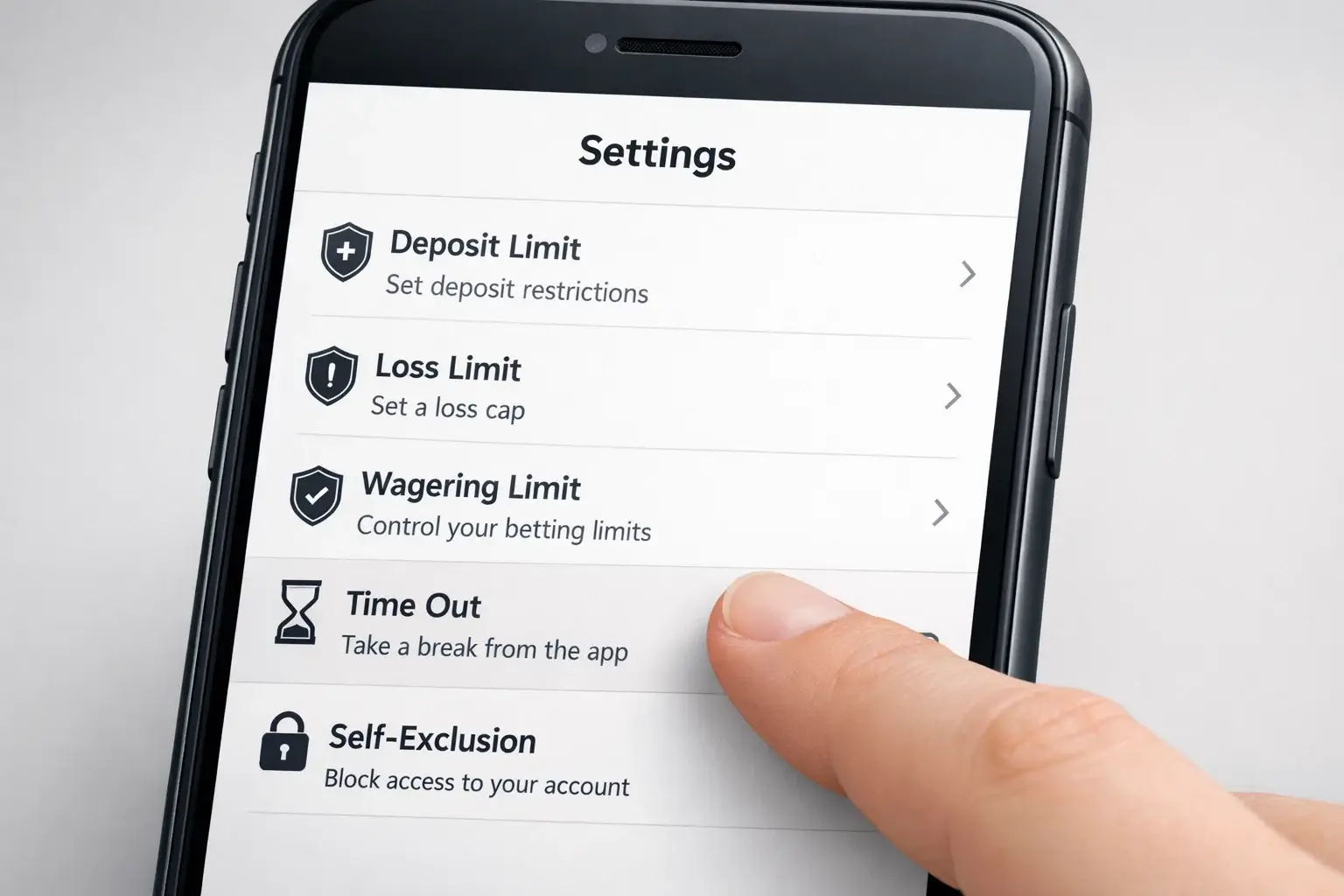
Legal sportsbooks are required to offer responsible gambling tools, and using these tools is a sign of strength, not weakness. They exist because even the sportsbooks recognize that some customers need guardrails. Taking advantage of them costs nothing and can prevent serious problems.
Deposit Limits
Deposit limits cap how much money you can add to your account within a specified period. You might set a weekly limit of fifty dollars, meaning you cannot add more regardless of how badly you want to chase losses.
These limits can typically be decreased immediately but require waiting periods to increase, often twenty-four to seventy-two hours. This asymmetry prevents impulsive decisions to remove protections during heated moments. Setting deposit limits at the same level as your predetermined budget creates an external enforcement mechanism for your internal commitment.
Loss Limits
Loss limits restrict how much you can lose within a time period before being locked out of betting. If you set a weekly loss limit of one hundred dollars, the sportsbook prevents further bets once you hit that amount.
This tool protects against catastrophic sessions when the temptation to keep betting can be overwhelming. Loss limits remove the option, forcing the break that your rational mind knows you need. Set them conservatively and resist removing them when they feel restrictive — that feeling often means they are working as intended.
Cooling-Off Periods
Cooling-off periods temporarily suspend your account for a duration you select, typically ranging from twenty-four hours to several weeks. During this time, you cannot log in, place bets, or access your account.
These periods are useful when you recognize you need to step back but do not trust yourself to do so voluntarily. Using a cooling-off period is not admitting defeat — it is making a mature decision to prioritize your wellbeing. Many bettors use them routinely during stressful life periods.
Self-Exclusion Options
Self-exclusion is the most serious tool, involving a commitment to be banned from a sportsbook for an extended period, often one to five years. Many states offer multi-operator self-exclusion covering all licensed sportsbooks simultaneously.
Self-exclusion should be considered if lesser measures have failed. If deposit limits, loss limits, and cooling-off periods have not been enough to control your betting, self-exclusion may be necessary. It is not shameful — it is responsible recognition that you need significant help.
Recognizing Problem Gambling Signs

Problem gambling develops gradually, often without the person recognizing what is happening until significant damage has occurred. Knowing the warning signs allows you to catch issues early, when they are easiest to address.
Warning Signs Checklist
Several behaviors indicate that gambling may be becoming problematic. Betting more than you can afford to lose is the most obvious. Chasing losses by betting more to recover previous losses is another major red flag. Lying to family or friends about how much you bet or how much you have lost suggests shame that often accompanies problem gambling.
Neglecting responsibilities because of gambling — missing work, ignoring family obligations, skipping social commitments — indicates that betting has assumed inappropriate priority in your life. Borrowing money to gamble or using funds meant for other purposes crosses a critical line. Feeling restless or irritable when trying to cut back suggests psychological dependence.
If you recognize multiple items from this list in your own behavior, take it seriously. Early intervention is far more effective than waiting until consequences become severe. The progression from recreational betting to problem gambling can happen faster than you expect.
Emotional Betting Indicators
Betting to escape problems or relieve negative emotions like anxiety or depression is a warning sign. Gambling should be entertainment you engage with when in a good mental state, not a coping mechanism. Using betting as emotional regulation often creates a destructive cycle.
Feeling preoccupied with gambling — constantly thinking about bets or scheming ways to get more betting money — indicates unhealthy mental space. Feeling guilty or remorseful after betting, even when you win, suggests internal conflict about your gambling that deserves attention.
Financial Stress Signals
Financial consequences are often the most concrete evidence of problem gambling. Unexplained debt accumulation, overdrafted accounts, missed bill payments, and mysterious cash shortages all warrant examination. If gambling is causing financial strain, the entertainment justification no longer applies.
Selling possessions to fund gambling or cover losses is a serious escalation. The same applies to taking out loans or using credit cards specifically to bet. These behaviors indicate that gambling has outpaced your resources and requires external funding to continue.
When Betting Becomes a Problem
The line between heavy recreational betting and problem gambling is not always clear, but certain patterns definitely cross it. Understanding when betting has become a problem is the first step toward addressing it.
Self-Assessment Questions
Honest answers to direct questions can reveal whether your gambling has become problematic. Have you ever lied to someone important about how much you gamble? Have you ever felt the need to bet more money to achieve the same excitement? Have you made repeated unsuccessful efforts to control or stop gambling?
Have you gambled when feeling distressed, anxious, or depressed? After losing money, have you returned another day to try to win it back? Have you jeopardized a significant relationship, job, or educational opportunity because of gambling? Have you relied on others to provide money to relieve financial situations caused by gambling?
If you answer yes to multiple questions, you likely have a gambling problem that requires attention. These questions come from clinical screening tools used by professionals and are designed to identify gambling disorder. Answering honestly, without minimizing or rationalizing, is essential.
The Gambling Disorder Spectrum
Gambling disorder exists on a spectrum from mild to severe. Mild gambling disorder involves meeting four to five diagnostic criteria and typically causes limited life impairment. Moderate disorder involves six to seven criteria with more significant consequences. Severe disorder involves eight or more criteria and substantial life disruption.
Recognizing that gambling problems exist on a spectrum helps combat the all-or-nothing thinking that prevents many people from seeking help. You do not need to have lost everything to have a gambling problem worth addressing. Mild problems are easier to resolve than severe ones, making early intervention valuable.
Professional assessment can clarify where you fall on this spectrum and what level of intervention is appropriate. Some people benefit from self-help approaches and increased structure. Others need professional counseling. Severe cases may require intensive treatment programs.
Impact on Mental Health
Problem gambling frequently co-occurs with other mental health conditions including depression, anxiety, and substance use disorders. Sometimes gambling contributes to these conditions; sometimes these conditions contribute to gambling. Often the relationship is bidirectional, with each making the other worse.
The shame, guilt, and financial stress of problem gambling create psychological burden beyond the gambling itself. Relationships suffer, work performance declines, and self-image deteriorates. These secondary consequences can become as damaging as the gambling that caused them.
Addressing problem gambling often requires addressing co-occurring conditions as well. Treatment that focuses only on gambling behavior without examining underlying mental health issues frequently fails. Comprehensive assessment and integrated treatment produce better outcomes.
Resources for Help
If you recognize that gambling has become problematic, numerous resources exist to help. These range from self-help materials to peer support groups to professional treatment. The right resource depends on the severity of your problem and your personal preferences.
The National Council on Problem Gambling operates the national helpline at 1-800-522-4700, available twenty-four hours daily. Trained counselors provide support, information, and referrals to local resources. They also offer text and chat options for those who prefer not to call. This helpline is free, confidential, and staffed by people who understand gambling problems without judgment.
Gamblers Anonymous follows the twelve-step model familiar from Alcoholics Anonymous, offering peer support through regular meetings. Many people find the shared experience and accountability of GA meetings invaluable for maintaining recovery. Meetings are available in most areas and increasingly online.
State-specific resources vary but often include funded treatment programs, counseling services, and additional helplines. Your state gaming commission website typically lists available resources. Many states have expanded problem gambling services alongside legalizing sports betting, recognizing the need for support infrastructure.
Tips for Sustainable Betting

Sustainable betting means maintaining a healthy relationship with gambling over the long term. These practices help ensure that betting remains entertainment rather than becoming compulsion.
Keep Records of All Bets
Tracking every bet you place serves multiple purposes. It provides accurate accounting of wins and losses rather than the selective memory that often makes gambling seem more successful than it actually was. It creates documentation for tax purposes. Most importantly, it forces regular confrontation with your betting reality.
Record the date, event, bet type, amount wagered, odds, and outcome for every bet. Calculate running totals of money won and lost. Review these records regularly — weekly or monthly — to assess whether your betting aligns with your budget and expectations.
Many bettors are surprised when they see actual records versus their mental estimates. Human memory tends to emphasize wins and minimize losses. Cold numbers on a spreadsheet do not lie.
Set Win and Loss Limits for Sessions
Beyond overall budget limits, setting session limits provides additional protection. You might decide that on any given day, you will stop if you lose fifty dollars or if you win one hundred dollars. These limits prevent both catastrophic losses and the phenomenon of giving back winnings by continuing to bet.
Win limits are psychologically difficult because stopping while winning feels counterintuitive. But winning streaks end, and locking in profits ensures you actually benefit from good days rather than donating winnings back to the sportsbook.
Session limits also create natural stopping points that prevent betting from consuming excessive time. Even without financial problems, spending every Sunday glued to betting apps rather than engaging with family or friends represents an unhealthy relationship with gambling.
Never Borrow Money to Bet
Borrowing money to gamble represents crossing a fundamental line. It means your betting has exceeded your resources and requires external funding to continue. This situation virtually guarantees that losses will create financial problems beyond lost entertainment dollars.
The prohibition on borrowing includes all forms: credit cards, loans, advances from employers, money from family or friends, and any other external source. If you cannot fund betting from your predetermined discretionary budget, you cannot afford to bet.
If you have already borrowed money for gambling, recognize this as a serious warning sign requiring immediate attention. Stop betting entirely and focus on repaying what you owe. Consider seeking professional help to understand how you reached this point and prevent recurrence.
Family and Friends Support
Gambling problems affect more than just the person gambling. Family members and friends often suffer consequences and frequently notice problems before the gambler acknowledges them. Understanding how to help someone with gambling issues can facilitate intervention and support.
How to Help Someone with Gambling Issues
Approaching someone about their gambling requires care. Accusations and ultimatums typically trigger defensiveness. Instead, express concern using specific observations and personal impact statements. Focus on behaviors you have witnessed rather than character judgments.
Educate yourself about gambling disorder before having conversations. Understanding that problem gambling is a recognized condition, not merely a character flaw, helps frame discussions productively. Resources from the National Council on Problem Gambling provide helpful background.
Offer support for seeking help rather than demanding immediate change. Recovery from gambling disorder is a process, and supporting someone through that process is more effective than expecting overnight transformation. Be patient but also maintain appropriate boundaries about what you will and will not accept.
Protecting Yourself and Others
If someone’s gambling is affecting you, protecting yourself is legitimate and necessary. This might mean separating finances, declining to provide money, or limiting exposure to gambling-related stress. Supporting someone does not require sacrificing your own wellbeing.
Gam-Anon provides support for family members and friends of problem gamblers, similar to how Al-Anon supports those affected by alcoholism. These groups offer perspective, coping strategies, and community with others facing similar situations.
In severe cases, professional intervention services can help structure conversations that encourage treatment. These facilitated discussions improve the odds of reaching someone who might otherwise resist acknowledging their problem.
Frequently Asked Questions
How do I know if my gambling is a problem?
If gambling is causing financial strain, relationship conflict, or emotional distress, it may be problematic. Key indicators include betting more than you can afford, chasing losses, lying about gambling, and neglecting responsibilities. Honest self-assessment using screening questions can clarify whether your gambling has crossed into problem territory.
What is the first step if I think I have a gambling problem?
Acknowledge the concern and seek information. Contact the National Council on Problem Gambling helpline at 1-800-522-4700 for confidential support and guidance. They can help assess the severity of your situation and recommend appropriate resources ranging from self-help materials to professional treatment.
Can I still bet if I set strict limits?
Some people can return to controlled gambling after addressing problems, while others find abstinence necessary. This depends on the severity of your gambling disorder and your personal response to attempts at moderation. Professional guidance can help determine what approach is appropriate for your situation.
How do deposit limits and self-exclusion work?
Deposit limits cap how much money you can add to your sportsbook account within a set period. Self-exclusion bans you from a sportsbook entirely for a chosen duration. Both tools are available through sportsbook account settings. Limits can be reduced immediately but require waiting periods to increase, preventing impulsive removal of protections.
What should I do if a family member has a gambling problem?
Express concern without accusation, educate yourself about gambling disorder, and offer support for seeking help. Protect yourself financially if necessary, and consider attending Gam-Anon meetings for guidance from others in similar situations. Professional intervention services can help structure difficult conversations if needed.
