
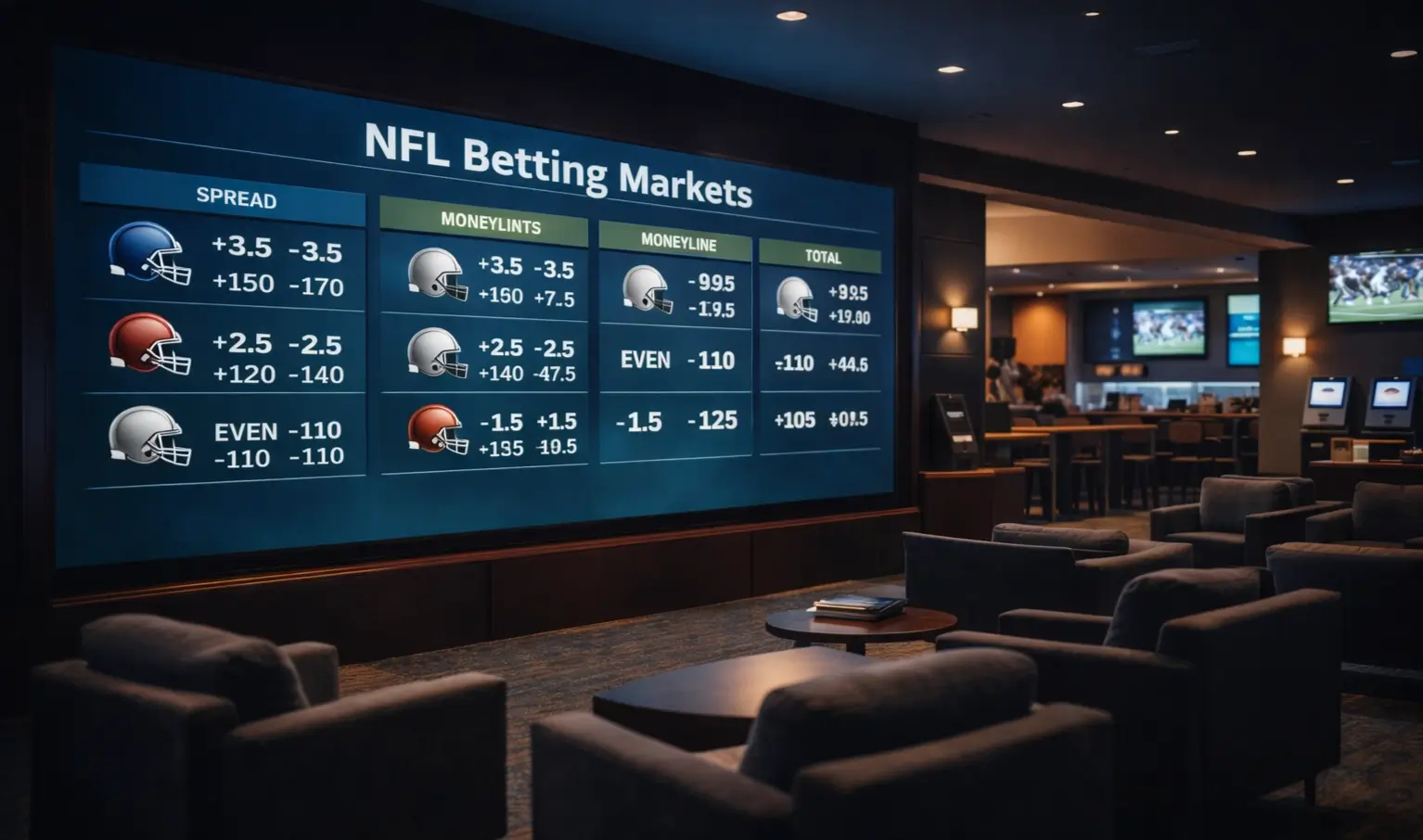
Walking into a sportsbook for the first time, whether physical or digital, can feel overwhelming. The betting board displays dozens of options for a single game: spreads, moneylines, totals, props, teasers, and more. Each market type serves a different purpose and appeals to different betting styles. Understanding what each bet actually means is the foundation upon which all successful football wagering is built.
The variety of betting options has expanded dramatically in 2026. Legalized sports betting across most American states has driven fierce competition among sportsbooks, and that competition manifests in ever-more creative betting markets. Where bettors once chose between a handful of options, they now face menus with hundreds of possibilities for marquee matchups. This abundance creates opportunity for those who understand the landscape.
This guide breaks down every major type of football bet you will encounter. We will explain how each works, when it makes sense to use it, and the strategic considerations that separate informed bettors from those throwing darts blindly. By the end, you will approach any betting board with confidence, knowing exactly what you are looking at and how to evaluate each option.
Point Spread Wagering Rules
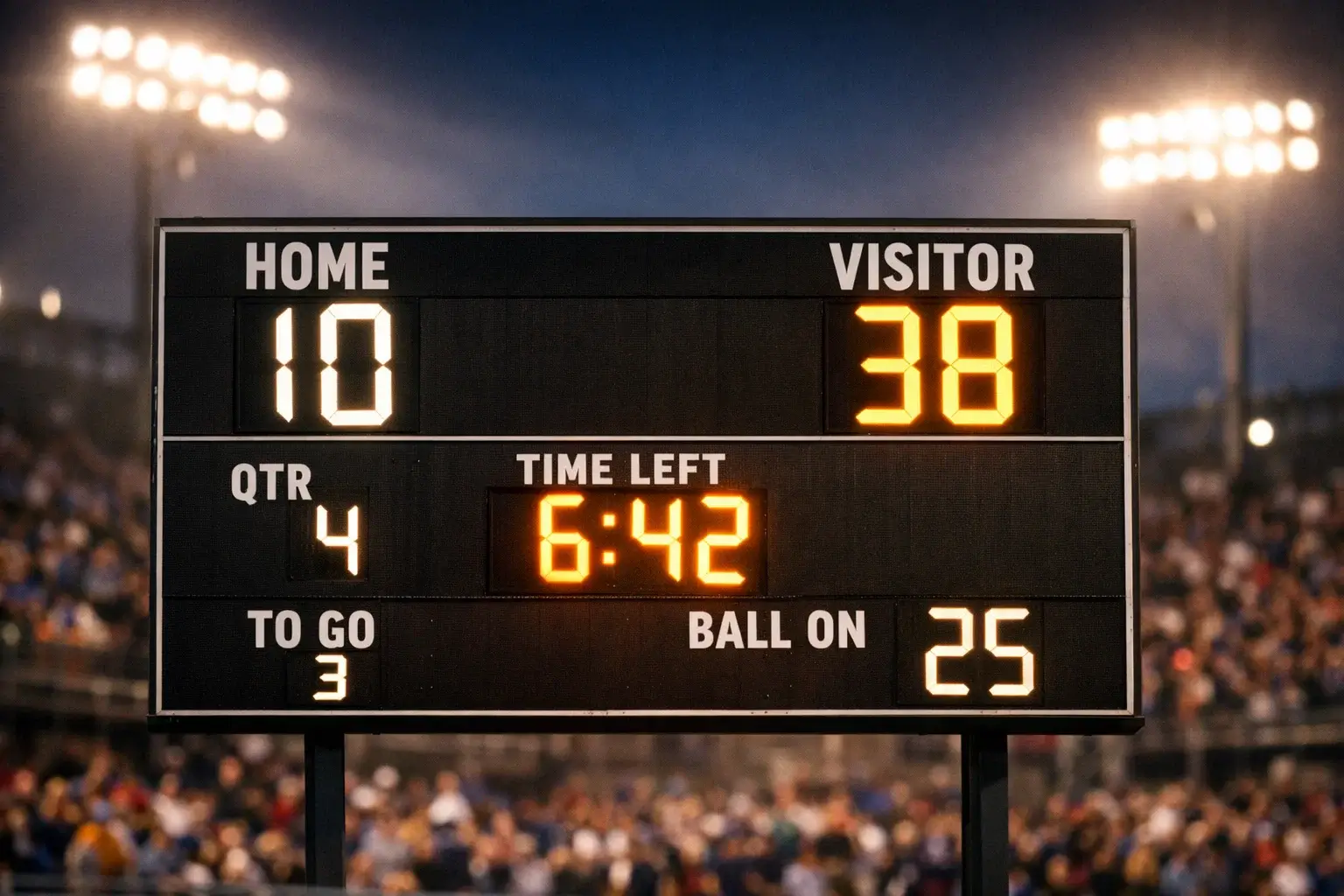
The point spread is the most popular way to bet on football and the market most bettors encounter first. Spreads exist to level the playing field between mismatched opponents, creating a roughly equal proposition regardless of which team is objectively better.
How Spreads Work
When oddsmakers set a spread, they are predicting the margin of victory. If the Kansas City Chiefs are favored by seven points over the Las Vegas Raiders, the spread is listed as Chiefs -7 and Raiders +7. For a bet on the Chiefs to win, they must win by more than seven points. For a bet on the Raiders to win, they must either win outright or lose by fewer than seven points.
The favorite is always denoted with a minus sign, indicating they must “give” points to the underdog. The underdog carries a plus sign, meaning they “receive” points that are added to their final score for betting purposes. This adjusted scoring determines winners and losers in spread betting, not the actual game outcome.
Standard spread bets are priced at -110 on both sides, meaning you risk one hundred ten dollars to win one hundred. This pricing creates the vigorish that ensures sportsbook profitability. Some books offer reduced juice at -105, which represents better value for bettors and is worth seeking out through line shopping.
Covering and Pushing
“Covering the spread” means the team you bet on has performed well enough against the point spread to make your wager a winner. If you bet Chiefs -7 and they win 31-21, a ten-point margin, the Chiefs covered. If you bet Raiders +7 and the Chiefs win 24-20, a four-point margin, the Raiders covered because adding seven points to their score would give them a 27-24 victory.
A “push” occurs when the final margin lands exactly on the spread number. If the Chiefs win by exactly seven points, neither side wins or loses. Your original stake is returned, and the bet is essentially voided. This is why half-point spreads exist, to eliminate push possibilities and force a definitive outcome.
Understanding these mechanics is crucial because the margin matters enormously. A team can dominate a game statistically yet fail to cover if they win by a narrower margin than expected. Conversely, a team can play poorly but cover if they keep the game close enough. Spread betting rewards prediction accuracy about margins, not simply picking winners.
Half-Point Spreads and Key Numbers
Half-point spreads like -3.5 or +6.5 guarantee a winner on every bet since no football game can end with a half-point margin. These lines are particularly significant around key numbers. In football, the most common margins of victory are three and seven points, reflecting the scoring values of field goals and touchdowns.
The difference between +3 and +3.5 is substantial because many games end with exactly a three-point margin. Getting the half-point on key numbers can be the difference between a push and a win, or a loss and a push. Smart bettors pay close attention to whether spreads sit on the favorable or unfavorable side of these crucial thresholds.
When evaluating spread bets, always consider where the number falls relative to key numbers. A spread of -2.5 is significantly different from -3.5 despite looking similar at first glance. That single point encompasses the most common margin in professional football, making it one of the most valuable points you can capture or surrender.
Moneyline Betting
Moneyline betting strips away the complexity of spreads and asks a simple question: which team will win? There is no point spread to consider, no margin to calculate. Pick the winner, and your bet wins.
Straight-Up Winner Picks
Moneyline odds reflect the perceived probability of each team winning. Favorites carry negative odds indicating how much you must risk to win one hundred dollars. Underdogs carry positive odds showing how much profit a one hundred dollar bet would generate.
If the Bills are -180 favorites against the Jets at +155, you would need to bet one hundred eighty dollars on Buffalo to win one hundred in profit. A one hundred dollar bet on New York would return one hundred fifty-five dollars profit if the Jets pull the upset. These odds imply the market believes Buffalo wins roughly 64 percent of the time while New York wins about 39 percent, with the gap representing the sportsbook margin.
Moneyline betting is straightforward but not necessarily simple. The challenge lies in determining whether the odds accurately reflect true winning probability or whether value exists on one side.
When Moneyline Beats Spread
Certain situations favor moneyline bets over spread bets. When you believe strongly in an underdog’s ability to win outright, the moneyline often offers better expected value than taking the points. The additional juice on the spread may exceed the value of points you expect to be irrelevant.
Consider a scenario where you project the underdog wins 35 percent of the time. If they are +3 at -110 on the spread but +140 on the moneyline, the moneyline might offer superior expected value depending on how often you expect them to lose by one or two points versus winning outright. Running these calculations helps identify which market presents the better opportunity.
Heavy favorites present the opposite calculation. When a team is -300 or worse on the moneyline, the spread often becomes more attractive. Risking three hundred dollars to win one hundred requires enormous confidence in an outright victory, while the spread typically offers much more manageable pricing even if the team needs to win by a substantial margin.
Before placing your first wager, it is crucial to understand how to read football betting odds to calculate your potential payouts accurately.
Over/Under (Totals) Betting

Totals betting removes team allegiance from the equation entirely. You are not betting on who wins but on how many combined points both teams will score. The sportsbook sets a number, and you decide whether the actual total will be over or under that figure.
How Totals Are Set
Oddsmakers establish totals by analyzing offensive and defensive efficiency, pace of play, weather conditions, and historical scoring patterns between the teams involved. A game featuring two high-powered offenses with weak defenses might see a total in the mid-fifties, while a defensive slugfest between ground-heavy teams could be set in the high thirties.
Like spreads, totals are typically priced at -110 on both sides. If a game has a total of 47.5 and you bet the over, you need the combined score to reach 48 or higher. Betting the under requires 47 or fewer total points. The half-point again eliminates push possibilities.
Totals move based on betting action and new information. Sharp money hitting the over might push a total from 44.5 to 45.5, while injury news about a starting quarterback could drop a number significantly. Monitoring line movement on totals provides insight into where informed money is flowing.
Factors Affecting Game Totals
Weather is perhaps the single most important variable for totals betting that does not apply equally to spreads. Wind disrupts passing games and can render field goals unreliable, typically suppressing scoring. Rain and snow slow game pace and increase ball security concerns, also tending toward lower totals. Bettors who ignore weather forecasts in totals betting are leaving money on the table.
Playing surface and venue matter as well. Dome games eliminate weather variables entirely and tend toward higher-scoring affairs. Altitude in Denver affects kicking distance and has historically correlated with slightly elevated totals. Grass versus turf surfaces can influence team performance based on roster composition and playing style preferences.
Injury situations obviously impact totals. A backup quarterback typically means fewer points for that offense, and the total should adjust accordingly. But the market often overreacts to injury news, creating value opportunities for bettors who can accurately assess the true impact of personnel changes.
Team Totals
Beyond game totals, most sportsbooks offer team totals, which allow you to bet on how many points a single team will score. If the game total is 47.5 and the spread is -3.5, the implied team totals are roughly 25.5 for the favorite and 22 for the underdog. Actual team total lines may differ slightly based on rounding and juice allocation.
Team totals are useful when you have a strong opinion about one team’s offensive or defensive performance but less conviction about the other. You might believe the Ravens will dominate defensively and hold their opponent under twenty points without having confidence in the Ravens offense. Betting the opponent’s team total under allows you to express that view directly.
Parlay Betting
Parlays combine multiple individual bets into a single wager where every selection must win for the bet to pay out. The appeal is obvious: parlay payouts are dramatically higher than straight bets because you are multiplying risk. The danger is equally obvious: one wrong pick kills the entire ticket.
Combining Multiple Selections
A two-team parlay at standard -110 odds pays roughly 2.6-to-1, meaning a one hundred dollar bet returns two hundred sixty dollars profit. A three-team parlay pays around 6-to-1. Four teams pays approximately 12-to-1. The payouts continue escalating with each added leg, with ten-team parlays offering lottery-like returns of roughly 640-to-1.
These enticing payouts come with a mathematical catch. The true odds of hitting a two-team parlay at 50 percent per leg are 4-to-1, not 2.6-to-1. The sportsbook captures significant edge on every parlay, and that edge compounds with each leg added. Parlays are among the highest-margin products sportsbooks offer, which is why they promote them heavily.
For recreational bettors seeking entertainment value, small-stakes parlays provide disproportionate excitement relative to potential loss. Watching a four-team parlay come down to the final leg is genuinely thrilling. The mathematical reality just needs to be acknowledged: parlays are a poor long-term strategy for serious bettors focused on profitability.
Same-Game Parlays
Same-game parlays allow combining multiple outcomes from a single contest, such as taking a team to win, a player to score a touchdown, and the total to go over. Traditional parlays required selections from different games because outcomes within a single game are correlated.
Sportsbooks now price same-game parlays using algorithms that account for these correlations, though the pricing is often less favorable than combining equivalent independent bets. The convenience and entertainment value appeals to many bettors, but the mathematical edge against you is typically even higher than standard parlays.
The strategic use of same-game parlays involves finding correlated outcomes that the algorithm underprices. If you believe a game will be a shootout, combining the over with touchdown scorer props might capture more value than the book’s correlation adjustment removes. This requires careful analysis and is not a reliable edge for most bettors.
Teaser Bets
Teasers are modified parlays that allow you to adjust point spreads or totals in your favor across multiple selections. In exchange for these more favorable lines, you accept reduced payouts compared to standard parlay odds.
How Teasers Work
A standard six-point teaser lets you move each spread or total by six points in your preferred direction. If you like the Cowboys at -7 and the Packers at +2, a teaser converts those to Cowboys -1 and Packers +8. Both adjusted lines must cover for the teaser to win.
Two-team six-point teasers typically pay around -120, meaning you risk one hundred twenty dollars to win one hundred. This is substantially worse than a standard two-team parlay but compensates for the significantly improved odds of each leg hitting. The trade-off can work in your favor depending on the numbers involved.
Larger teasers of 6.5 or 7 points are available at progressively worse odds. Some books offer “monster” or “sweetheart” teasers with even larger point adjustments at prices approaching even money or worse. The math on these extended teasers is generally unfavorable for bettors.
Optimal Teaser Strategy
Football teasers have one mathematically sound application: crossing key numbers with favorites between -7.5 and -2.5 or underdogs between +1.5 and +7.5. A six-point teaser that moves a line from -7.5 to -1.5 crosses both key numbers of seven and three, dramatically increasing win probability.
Research by professional bettors has shown that properly constructed teasers using these parameters can offer positive expected value, particularly with reduced-juice sportsbooks. The key is discipline: only teasing through the three and seven, and only at books offering favorable teaser pricing.
Teasers involving totals or spreads that do not cross key numbers are generally negative expected value. Moving a spread from +9 to +15 sounds impressive but does not cross any key numbers and provides less value than the payout reduction suggests. Disciplined teaser betting means passing on most opportunities.
Prop Bets (Propositions)
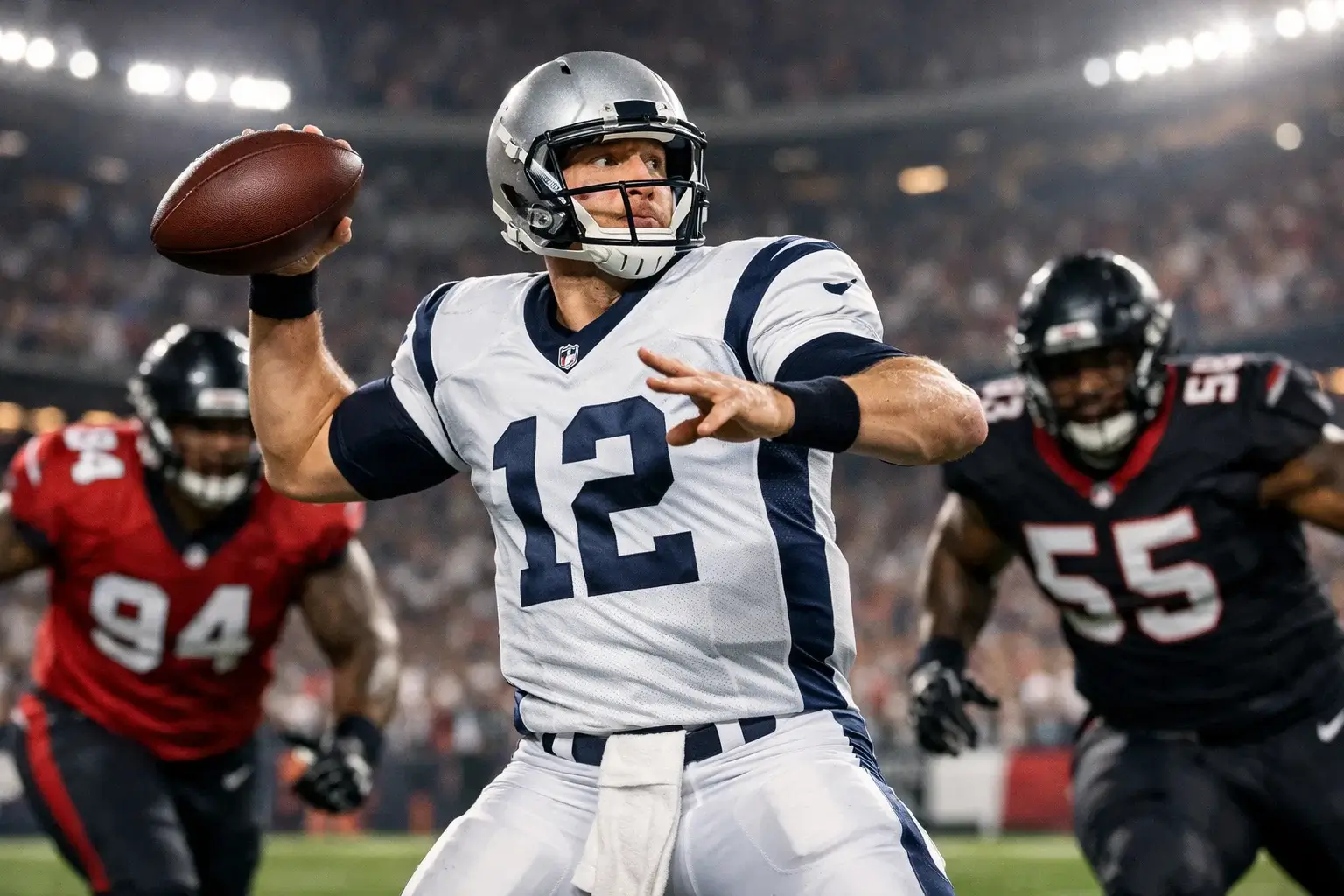
Proposition bets focus on specific outcomes within a game rather than final results. Props can cover virtually anything from individual player statistics to esoteric game events. The Super Bowl offers hundreds of props including things like national anthem length and coin toss results.
Player Performance Props
Player props are the most common proposition market. You might bet on Patrick Mahomes to throw over 285.5 passing yards, Derrick Henry to rush for over 95.5 yards, or Tyreek Hill to score a touchdown at +120 odds. Each prop has a set line or odds, and you predict whether the player exceeds or falls short.
These markets require different analysis than game betting. Matchup specifics matter enormously. A receiver facing a weak slot cornerback has different expectations than one drawing shadow coverage from an elite defender. Game script projections affect volume, as trailing teams pass more while leading teams run out the clock.
Player props often offer value because sportsbooks dedicate fewer resources to setting these lines compared to main markets. Sharp bettors who specialize in specific positions or statistical categories can find consistent edges that would not exist in more efficient spread and total markets.
Game-Specific Props
Game props focus on outcomes not directly tied to individual players. Which team will score first? Will there be a safety? Will either team score in the final two minutes of the first half? These markets add variety for bettors seeking action beyond traditional options.
First touchdown scorer props are particularly popular despite being notoriously difficult to predict. The randomness of goal-line situations makes these markets high-variance, but they offer entertainment value and occasionally present mathematical value when odds on likely candidates are mispriced.
Defensive and special teams props include categories like total sacks, interceptions, fumbles, and return touchdowns. These markets tend to be lower-volume with wider juice spreads, but they allow bettors to express views on aspects of the game that main markets do not directly capture.
Futures Betting
Futures bets are wagers on outcomes determined at season’s end rather than after a single game. Championship futures, division winners, and individual awards all fall into this category. The appeal is obvious: bet a small amount before the season and potentially win a massive payout months later.
Championship and Division Futures
Super Bowl futures are available year-round, with odds fluctuating based on roster moves, injuries, and on-field performance. A team might open at +2500 during the offseason and shorten to +600 by midseason after a strong start. Alternatively, preseason favorites can see their odds balloon after disappointing results.
Division and conference futures offer lower potential payouts but higher probability paths to victory. Betting a team to win their division requires them to finish first among three or four opponents rather than beating the entire league. These markets can provide value when a team’s divisional odds underrate their championship-level talent.
The primary strategic consideration with futures is capital efficiency. Money invested in futures is locked up for months, unable to generate returns from regular-season betting. Even positive expected value futures may underperform simply putting that capital to work on weekly games.
Player Awards and Win Totals
MVP, Offensive Player of the Year, Defensive Player of the Year, and Rookie of the Year markets let you bet on individual award races. These futures depend heavily on narrative and media perception alongside actual performance. Understanding how voters think is as important as predicting statistical output.
Season win totals set a number for each team and let you bet over or under. If a team is set at 9.5 wins, you can bet they win ten or more games or nine or fewer. These markets are attractive because they offer hundreds of opportunities to find value across the league rather than concentrating on championship long shots.
Win total betting rewards thorough offseason analysis. Teams with favorable schedules, improved rosters, or coaching upgrades might be undervalued. Conversely, teams relying on unsustainable luck from the previous season or facing regression indicators might warrant under bets.
First Half and Quarter Bets
Derivative markets break games into smaller segments, allowing bets on first-half spreads, first-half totals, individual quarter results, and more. These markets essentially create multiple betting opportunities from a single game.
Derivative Markets Explained
First-half lines are typically set at roughly half the full-game spread and total. If the game spread is -6 and the total is 48, the first-half spread might be -3 and the first-half total might be 23.5. Adjustments account for scoring patterns, as second halves tend to feature slightly more conservative play and clock management.
Quarter betting breaks things down even further, though liquidity in these markets is often limited. First-quarter bets can capture teams that script strong opening drives or defenses that take time to adjust. Fourth-quarter betting involves more randomness due to garbage-time scoring and game situation variability.
These derivatives appeal to bettors who have strong opinions about specific game phases. If you believe a team starts fast but fades late, first-half bets allow you to express that view without exposure to the portions of the game you are less confident about.
Strategy for Partial Game Betting
Successful half and quarter betting requires understanding team tendencies that differ from full-game expectations. Some teams consistently outscore their full-game implied first-half lines because their offenses operate efficiently on scripted opening possessions. Others have defenses that improve as coordinators make adjustments throughout the game.
Analyzing these patterns requires more granular data than full-game handicapping. Split statistics for first halves versus second halves, home versus away, and by opponent quality all become relevant. The additional analytical burden is why these markets sometimes offer more value than fully efficient main lines.
Live/In-Play Bets
Live betting allows wagering while the game is in progress, with odds updating constantly based on game events. This market has exploded in popularity and now represents a substantial portion of total betting handle.
Real-Time Betting Markets
Live spreads and totals adjust dynamically as the score changes and time elapses. A team that falls behind early might see their live spread become more favorable than the pregame number. A game with unexpected early scoring might push the live total higher than where it opened.
The speed of live betting creates both opportunity and danger. Bettors who can process information quickly and identify mispriced live lines can find value that disappears within seconds. Those who bet impulsively based on emotional reactions to game events typically destroy value.
Mobile betting apps have made live wagering accessible from anywhere, which increases both convenience and temptation. The ability to bet every possession creates numerous opportunities to compound mistakes through emotional chasing or tilt-driven wagering.
Next Score and Drive Results
Beyond adjusted spreads and totals, live betting offers proposition markets on immediate game events. Next scoring method, next team to score, drive result, and similar props provide constant action for bettors seeking engagement with every play.
These micro-markets are generally high-vig with substantial house edge. Sportsbooks recognize that live bettors often act impulsively and price accordingly. For entertainment purposes these markets deliver, but for serious value-seeking they rarely offer favorable mathematics.
Exotic and Specialty Bets
Beyond the mainstream options, several exotic bet types appeal to specific situations and bettor preferences. These markets see less action than standard options but serve important roles for certain strategies.
Round Robins
Round robins are multiple parlays created from a single set of selections. If you pick three teams, a round robin can create three two-team parlays covering each possible pairing. This provides some insurance against a single loss while capturing partial parlay value.
The mathematics of round robins are simply the sum of their component parlays. There is no special pricing or edge, just a convenient way to structure multiple correlated wagers. Round robins make sense when you have conviction on several selections but want to hedge against one mistake ruining everything.
If-Bets and Reverse Bets
If-bets are conditional wagers where the second bet only activates if the first bet wins. You might bet fifty dollars on the Chiefs, and if they win, automatically bet fifty dollars on the Ravens. This allows sequencing bets while limiting exposure to your original stake.
Reverse bets, sometimes called action-reverse, work both directions. Each selection triggers a bet on the other if it wins. These structures help manage bankroll across multiple games while creating some built-in conditional logic that straight bets lack.
Both if-bets and reverse bets appeal to bettors who want exposure to multiple games without risking parlay-level bankroll swings. The pricing is typically fair, simply combining the individual bet odds without additional juice.
Frequently Asked Questions
What is the best type of football bet for beginners?
Straight bets on spreads or totals at standard -110 pricing offer the simplest introduction to football betting. These markets are liquid, well-understood, and carry relatively low house edge compared to parlays or exotic props. Master the fundamentals before exploring more complex bet types.
Are parlays ever a good bet?
Mathematically, parlays carry higher house edge than straight bets and are generally poor value. However, small-stakes parlays provide entertainment value disproportionate to their cost, and properly correlated selections can occasionally offer value. Treat parlays as entertainment rather than investment strategy.
How do I know which bet type to use for a game?
Match your bet type to your conviction. If you strongly believe a team wins outright, consider the moneyline. If you think they win but are uncertain about margin, the spread might be better. If you have views on scoring but not the winner, totals allow expression of that analysis. Each market serves different predictions.
What are the most profitable types of football bets?
No bet type is inherently more profitable than others since long-term success depends on finding value regardless of market. That said, player props and alternative lines sometimes offer inefficiencies that more heavily bet main markets do not. Specialization in less popular markets can provide edges for dedicated bettors.
Should I bet teasers or parlays?
Standard parlays almost always carry worse expected value than properly constructed teasers through key numbers. If you are going to combine selections, a disciplined teaser strategy crossing three and seven has mathematical justification while random parlays do not. Neither is optimal compared to finding value in straight bets.
For the most comprehensive insights, always refer to our main football betting guide before the season starts.
