

Talk to any consistently profitable sports bettor and they will tell you the same thing: winning is not about having inside information or getting lucky on parlays. It is about process. The bettors who make money over the long haul have developed systematic approaches that give them an edge, however small, over the sportsbooks. They manage their money intelligently, identify value where others see none, and maintain discipline when the natural human impulse is to chase losses or double down on hot streaks.
Football betting presents unique strategic opportunities compared to other sports. The weekly schedule allows time for thorough research between games. The importance of key numbers like three and seven creates specific situations where small line differences carry outsize value. The massive public interest in NFL and college football generates inefficiencies that sharper bettors can exploit. Understanding and leveraging these characteristics separates successful football bettors from the crowd throwing money at their favorite teams.
This guide covers proven strategies that work in 2026, from foundational bankroll management to advanced techniques like arbitrage and hedging. Some methods require more time and sophistication than others, but every bettor, regardless of experience level, can implement at least a few of these approaches immediately. The goal is not to turn you into a professional overnight but to give you the tools to make smarter bets and protect your bankroll while you continue learning.
Bankroll Management & Unit Betting Formulas

Before discussing any betting strategy, we need to establish the framework that makes all other strategies possible. Bankroll management is not glamorous, and it will not help you pick winners. But without it, even the most skilled handicapper will eventually go broke. Variance in sports betting is brutal, and proper bankroll discipline is your armor against the inevitable losing streaks.
Setting Your Betting Bankroll
Your bankroll is the total amount of money you have specifically allocated for sports betting. This should be money you can afford to lose entirely without affecting your financial obligations or quality of life. Rent money is not bankroll money. Emergency fund savings are not bankroll money. Your bankroll is discretionary entertainment funds that you have mentally written off the moment you deposit them into a sportsbook account.
For most recreational bettors, starting with a bankroll of five hundred to two thousand dollars is reasonable. This amount is large enough to allow proper unit sizing while small enough that losing it would be disappointing but not devastating. Track your bankroll separately from your other finances using a dedicated spreadsheet or betting tracker app that records every deposit, withdrawal, and wager.
Unit Sizing and the Percentage Rule
A unit is a standardized bet size based on your total bankroll. Most successful bettors size their units between one and five percent of their bankroll, with the majority settling around one to two percent for standard plays. If your bankroll is one thousand dollars and you use two percent units, your standard bet is twenty dollars.
The logic behind small unit sizes is variance protection. Even excellent bettors with a genuine long-term edge experience losing streaks of ten, fifteen, or twenty bets. If you are betting ten percent of your bankroll per game, a ten-bet losing streak wipes out your entire roll. At two percent per bet, that same streak costs you twenty percent, leaving you with plenty of ammunition to continue. Most professional bettors keep their largest plays at three to five percent of bankroll, and these maximum bets should be rare.
The Kelly Criterion Explained
The Kelly Criterion is a mathematical formula for optimal bet sizing that maximizes long-term bankroll growth. The formula is: (bp – q) / b, where b is the decimal odds minus one, p is your estimated probability of winning, and q is the probability of losing (1 – p). For example, if you believe a team has a 55 percent chance of covering a spread priced at -110 (decimal 1.91), the calculation yields roughly 5.5 percent of your bankroll as the theoretically optimal bet size.
In practice, most bettors use fractional Kelly, typically between one-quarter and one-half of the formula’s recommended size. Full Kelly betting produces optimal growth mathematically but with extreme volatility that most humans find psychologically unbearable. The Kelly approach requires you to accurately estimate your win probability, which is easier said than done. For this reason, many professionals prefer simple flat betting with consistent unit sizes.
Avoiding Emotional Decisions
The fastest way to destroy a bankroll is not bad handicapping but emotional betting. Chasing losses after a bad day, increasing stakes to “get back to even,” and making impulsive bets without proper analysis are the behaviors that separate losing recreational bettors from everyone else.
Establish rules for yourself and follow them ruthlessly. Set a daily or weekly loss limit that triggers a mandatory break from betting. If you lose three units in a day, step away until tomorrow. If you lose ten units in a week, take the rest of the week off. Similarly, do not let winning streaks inflate your ego or your bet sizes. The goal is making good decisions over thousands of bets, not maximizing returns from any single day or week.
Value Betting Strategy

Every bet has an expected value determined by the probability of winning multiplied by the potential profit, minus the probability of losing multiplied by the stake. A positive expected value bet, written as +EV, is one where the mathematical expectation is profitable over time. Finding and betting +EV opportunities is the core skill that separates profitable bettors from the masses.
Identifying Positive Expected Value
Value exists when the implied probability in the betting odds is lower than the true probability of the outcome. If a sportsbook prices a team at +150 (40 percent implied probability) but you believe they have a 50 percent chance of winning, you have found value. Betting that team repeatedly in similar situations will profit over time, even though you will lose more individual bets than you win.
The challenge, of course, is accurately assessing true probabilities. The sportsbook has professional oddsmakers, statistical models, and decades of data. What makes you think you know better? The honest answer is that you probably do not, at least not consistently across all games. But you do not need to beat the book on every line. You need to identify specific situations where your analysis provides an edge.
This might mean specializing in a particular conference, team, or bet type where you have developed expertise. It might mean focusing on props or alternative markets where the books devote less attention. It might mean exploiting specific game situations that your research suggests are mispriced. Whatever your approach, value betting requires humility about your limitations and focus on your genuine strengths.
Building Your Own Power Ratings
Many successful football bettors develop their own power ratings, numerical representations of team strength that allow objective comparison between opponents. The simplest approach is margin-based ratings. Start with every team at a baseline, typically 1500 or similar, then adjust after each game based on the margin of victory or defeat, the opponent’s rating, and home field advantage.
More sophisticated models incorporate efficiency metrics like yards per play, points per drive, or advanced statistics like Defense-adjusted Value Over Average. What you want is a system that produces predictive lines you can compare against the market. When your model says the Dolphins should be three-point favorites and the book has them at one, you have a potential value opportunity. The discipline of building and maintaining your own numbers forces you to think systematically about team strength rather than reacting emotionally to media narratives.
When the Public Creates Value
One of the most reliable sources of value in football betting is public bias. Recreational bettors tend to favor certain types of teams: popular franchises, high-powered offenses, and recent winners. They overvalue name recognition and undervalue situational factors. Sportsbooks know this and shade their lines accordingly, creating opportunities for sharper bettors willing to bet against the crowd.
Prime-time games are classic examples. When the Cowboys play Sunday Night Football, the public piles on regardless of the matchup or circumstances. Books often adjust the line a half-point or more to account for this lopsided action, which means betting against Dallas in these spots often provides value even if the Cowboys are legitimately the better team. You are not betting on the other team to win outright but rather that the spread is pushed beyond fair value.
Tracking public betting percentages through various websites helps identify these opportunities. When 80 percent of bets are on one side but the line moves toward the other side, that is a strong signal that sharp money disagrees with the public. These reverse line movements are some of the clearest value indicators available to recreational bettors.
Key Number Strategy
Football is unique among major sports in that most scoring comes in specific increments: three points for a field goal and seven for a touchdown with a successful extra point. This mathematical reality means certain point spread values are far more common as final margins than others, and understanding key numbers is essential for football bettors.
The Significance of Three and Seven
Analysis of thousands of NFL games reveals that three is the most common margin of victory, occurring in approximately 15 percent of all games. Seven is the second most common, appearing in about 9 percent of outcomes. Together, these two numbers account for nearly a quarter of all NFL final margins.
This concentration matters because it affects how often you will push or barely lose on spread bets. Getting a team at +3 rather than +2.5 is not just half a point on paper. It is the difference between pushing and losing roughly 15 percent of the time that margin occurs. That translates to real money over a season of betting. College football shows similar patterns though with more variance due to the wider talent disparity between teams.
Buying and Selling Points
Most sportsbooks allow you to “buy” points by accepting worse odds in exchange for a more favorable spread. You might pay -120 instead of -110 to move a line from -3 to -2.5. The math depends on the specific numbers involved. Buying off or onto the key numbers of three and seven is almost always justified at standard rates. Moving a spread from +2.5 to +3 at -120 is a bargain given how often games land exactly on three.
However, buying points in non-key number ranges typically has negative expected value. Moving from +5.5 to +6 does not dramatically change your win probability because relatively few games land on exactly six. Smart bettors are selective about when to buy points, reserving the expense for situations where the mathematical value justifies the cost.
When Half-Points Matter Most
Half-point spreads that sit directly on key numbers carry outsized importance. The difference between +3 and +2.5 is much larger in terms of expected outcomes than the difference between +4 and +3.5. If multiple sportsbooks offer different lines around a key number, always take the superior number even if the juice is slightly worse. Getting the Steelers at +3 with -115 juice is better than +2.5 with -105 juice.
Similarly, be wary of teasers that do not cross key numbers. A six-point teaser that moves a spread from -8 to -2 crosses both three and seven, dramatically improving your win probability. A teaser that moves a line from -5 to +1 crosses no key numbers and provides minimal value despite the apparent six-point shift.
Even the best predictive models will fail without strict football bankroll management to protect your funds during cold streaks.
Situational Handicapping
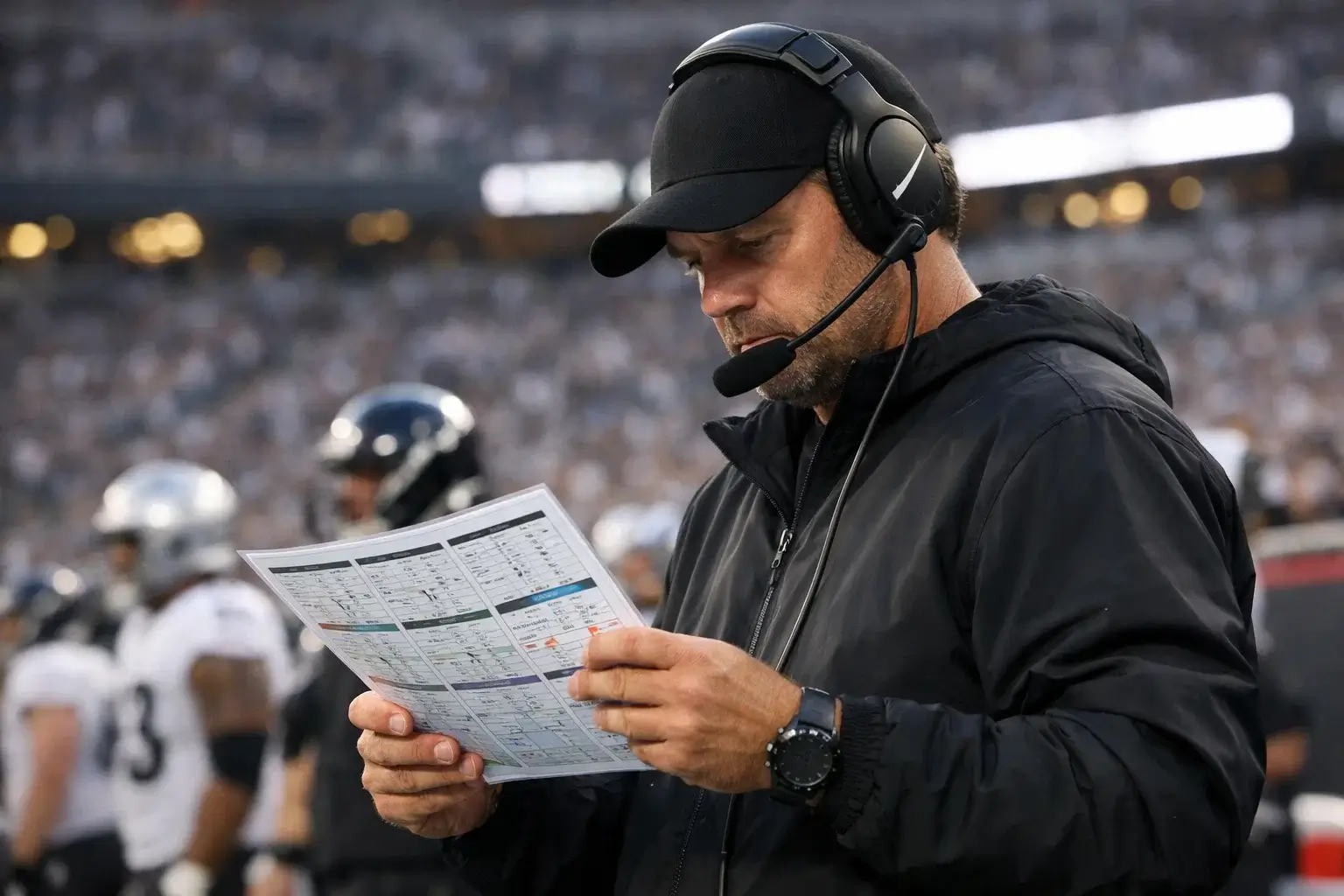
Pure power ratings and statistical models miss important context that can significantly affect game outcomes. Situational handicapping involves identifying game circumstances that are likely to influence performance beyond what the numbers suggest. Sharp bettors incorporate these factors into their analysis, often finding value that pure model-based bettors overlook.
Revenge Games and Motivation
Teams are not robots, and motivation matters in professional sports. Revenge games, where a team faces an opponent that embarrassed them previously or ended their playoff run, often produce elevated performance. However, revenge narratives are often overblown by media and public bettors. The most valuable revenge spots involve genuinely memorable losses: playoff eliminations, blowouts on national television, or games with personal conflicts.
Letdown spots represent the opposite phenomenon. A team coming off a huge emotional win, particularly one that received extensive media attention, often underperforms the following week. Games following playoff-clinching victories, upset wins over rivals, or nationally televised showcases are classic letdown situations.
Travel and Scheduling Spots
NFL teams play just seventeen regular-season games, but the travel and scheduling demands vary considerably. West coast teams traveling east for early kickoffs face particular challenges, as their bodies are operating on Pacific time when the game starts. While this has long been considered a disadvantage, recent analysis shows mixed results, with some studies finding no significant underperformance after adjusting for team strength and normal road disadvantages.
Short weeks affect both teams in Thursday Night Football games, but the impact is not symmetric. The road team typically faces worse conditions, having to travel immediately after Sunday’s game with only three days to recover and prepare. However, data shows that home teams in Thursday night games have not consistently covered at elevated rates, and in recent years road teams have actually performed better against the spread in these matchups.
Bye week timing also matters. Teams coming off their bye week have additional rest, practice time, and opportunity to game plan for their upcoming opponent. However, the data on post-bye performance is mixed, with recent seasons showing inconsistent results. Some situational factors, such as facing specific opponents or being a road favorite, appear to matter more than the bye week advantage alone.
Weather Impact on Scoring
Outdoor games in adverse weather conditions tend to see reduced scoring, which directly affects totals betting and can influence spread outcomes. Wind is particularly impactful, disrupting passing games and field goal attempts. A forecast showing sustained winds above fifteen miles per hour should trigger serious consideration of the under, especially in games featuring pass-heavy offenses.
Dome teams playing outdoors in adverse weather represent another situational angle. Teams that practice and play most of their games in climate-controlled environments may struggle to adjust when facing wind, precipitation, or extreme temperatures. This is particularly relevant in late-season and playoff games.
Line Shopping and Timing
Even the most skilled handicapper leaves money on the table if they consistently take inferior odds. Line shopping, the practice of comparing odds across multiple sportsbooks to find the best available number, is one of the simplest yet most impactful strategies any bettor can implement.
Getting the Best Number
Different sportsbooks often post different lines on the same game. One book might have the Chiefs at -3, another at -2.5, and a third at -3.5. If you believe the Chiefs will cover, taking -2.5 is objectively better than -3, which is better than -3.5. Over hundreds of wagers across a season, these half-points and full points add up to significant money.
Maintaining accounts at multiple reputable sportsbooks is essential for effective line shopping. Most serious bettors use at least three to five books. Odds comparison websites aggregate lines from numerous sportsbooks, allowing you to quickly identify where to find the best price. The discipline to actually shop lines before every bet is what separates committed bettors from casual ones.
Opening Versus Closing Line Value
Lines evolve from their opening release until game time, incorporating betting action, news, and information. The closing line, the final number posted before kickoff, is generally considered the most accurate market prediction because it reflects all available information and sharp money.
Some bettors specialize in betting early, attempting to grab favorable numbers before the market moves against them. Others prefer waiting until close to game time, reasoning that the closing line incorporates information they might have missed. There is no universally correct answer, and many bettors vary their timing based on the specific game and how the line has moved since opening.
Steam Moves and Sharp Action
Sharp bettors, professionals with proven track records and substantial bankrolls, can move lines significantly when they bet. A coordinated betting wave from sharps, called a steam move, often shifts lines rapidly across multiple sportsbooks. Several services track sharp action and report consensus moves.
This strategy has merit but comes with caveats. By the time steam move information reaches the public, the line has often already moved past the valuable number. The more sustainable approach is developing your own analysis and using sharp line movement as confirmation rather than primary signal. Blindly chasing sharp action without understanding the reasoning is just a different form of following the crowd.
Advanced Techniques: Arbitrage and Hedging

Beyond standard single-game betting, several advanced strategies allow bettors to lock in guaranteed profits or reduce risk on existing positions. These techniques require more capital and attention than basic betting but offer unique advantages in the right situations.
What Is Arbitrage Betting
Arbitrage, or “arbing,” exploits pricing differences between sportsbooks to guarantee profit regardless of outcome. When one book offers significantly different odds than another, a bettor can wager on all possible outcomes and lock in a small return no matter what happens.
For example, suppose Book A offers the Rams at +160 while Book B offers the Cardinals at +150 in the same game. By calculating the exact stakes required at each book, an arber can guarantee profit. These opportunities are rare and typically offer only one to three percent returns, but they are mathematically certain profits with no handicapping skill required.
The catch is that sportsbooks actively combat arbitrage betting. They use sophisticated software to detect arbing patterns and will limit or ban accounts engaged in the practice. Arbers must be discreet, vary their bet sizes, and sometimes accept suboptimal returns to avoid detection. For most recreational bettors, arbitrage is not a realistic long-term strategy, but understanding the concept illuminates how sportsbook pricing works.
Using Hedges to Lock Profit
Hedging involves placing additional bets to reduce risk on existing positions, typically when circumstances have changed since your original wager. The most common hedging scenarios involve futures bets that have increased dramatically in value.
Suppose you bet one hundred dollars on the Bengals to win the Super Bowl at +2000 before the season. They reach the championship game, and your ticket is now worth potentially two thousand dollars in profit. You can hedge by betting on their opponent, guaranteeing yourself a substantial return regardless of outcome. The optimal hedge depends on your risk tolerance, the specific odds available, and how much you need the guaranteed money versus how much you value the potential maximum payout.
Risk Mitigation in Parlays and Teasers
Multi-leg bets like parlays and teasers offer opportunities for creative hedging as games complete. If you hit the first three legs of a four-team parlay, you can hedge the final game to guarantee profit while still having upside if your original selection wins.
Live betting adds another dimension to hedging strategy. If your team builds a large lead, you can sometimes bet the other side at attractive odds, guaranteeing profit while the game is still competitive. This approach requires quick decision-making and access to in-game betting markets.
Common Strategy Mistakes

Even bettors who understand sound strategy often sabotage themselves through predictable errors. Recognizing these pitfalls helps you avoid them and stay on the path to long-term profitability.
Overvaluing Recent Performance
Recency bias is perhaps the most common mistake in sports betting. Teams that won big last week seem invincible, while teams coming off embarrassing losses appear hopeless. But weekly performance in football is highly variable, and last game’s result is a poor predictor of next game’s outcome.
Sharp bettors look at larger sample sizes and underlying metrics rather than box scores from one week. A team that lost 31-10 might have actually played well statistically, losing due to turnovers or special teams disasters unlikely to repeat. A team that won by twenty might have benefited from unsustainable luck that will regress. The betting market overreacts to recent results, creating value for those who can see past the immediate narrative.
Ignoring Context and Motivation
Not every game matters equally to the teams playing them. A playoff team resting starters in Week 18 is not the same team that battled for positioning in Week 14. A squad eliminated from contention may play loose and free or may have mentally checked out entirely. Blindly applying statistical models without considering context misses crucial information.
Pay attention to where teams are in their season, what they have to play for, and how coaches typically handle various situations. Some coaches prioritize finishing strong regardless of playoff implications, while others rest key players at every opportunity. These tendencies matter for betting purposes even if they do not show up in power ratings.
The Parlay Trap
Parlays are seductive because they offer massive payouts from small stakes. A five-team parlay at standard juice pays nearly 25-to-1, turning twenty dollars into five hundred dollars if all legs hit. But the mathematical reality is that parlays carry significantly worse expected value than single-game bets.
The house edge on parlays compounds with each leg added. A standard two-team parlay pays roughly 2.6-to-1 when true odds would be 3-to-1. That gap between true odds and payout represents money flowing directly to the sportsbook. By the time you reach five or six-team parlays, you are accepting lottery-like odds in exchange for lottery-like payouts.
Recreational bettors who treat parlays as occasional entertainment can enjoy them in moderation. But bettors who regularly bet parlays as their primary wagering method are systematically destroying value. The consistent winning path involves straight bets with occasional parlays for fun, not the reverse.
Frequently Asked Questions
How much of my bankroll should I bet on a single game?
Most successful bettors recommend one to two percent of your total bankroll per standard bet, with maximum bets of three to five percent reserved for highest-conviction plays. This conservative approach protects you from the inevitable losing streaks while allowing meaningful profit when your bets win. Betting five or ten percent per game is a recipe for bankruptcy, even with a genuine edge.
Can betting strategies guarantee profits?
No strategy can guarantee profits in sports betting. The house edge ensures that sportsbooks win over time against the average bettor. However, skilled bettors with genuine edges can profit long-term by finding value that exceeds the house take. Strategies like bankroll management, line shopping, and value identification improve your expected returns without guaranteeing any specific outcome.
Is it better to specialize in one sport or bet across many?
Specialization typically produces better results than spreading attention across numerous sports. Deep knowledge of one league allows you to identify value that casual bettors miss. You develop familiarity with specific teams, coaches, and situational factors that inform better predictions. Once you have achieved consistent success in one sport, you might expand, but most profitable bettors remain specialists.
How important is tracking my betting results?
Tracking is essential for serious bettors. Detailed records show which bet types and strategies are profitable and which are costing you money. Without tracking, you are operating blind, relying on feelings and memories that are notoriously unreliable when money is involved. Use a spreadsheet or betting tracker app to log every wager, including the line you took, stake, result, and any relevant notes.
Should I follow professional handicapper picks?
Following picks from purported experts is generally not profitable. The sports betting tout industry is filled with marketers rather than genuine winning bettors, and those who do have edges rarely sell their picks publicly. Even legitimate handicappers with documented success cannot guarantee their past performance will continue. Your best path to long-term success is developing your own analysis skills rather than outsourcing your thinking to others.
Discover more advanced tactics and daily picks on our top sports betting platform.
